Beyond Sweetness: Unlocking Whisky's Savory Notes
Explore the nuanced savory, umami, and earthy characteristics that often go unnoticed in your dram.
The Evolution of the Palate: Why Savory is the New Frontier
For decades, the whisky world was dominated by what many aficionados call "The Dessert Dram." If you think back to the early days of the single malt boom, the marketing was almost entirely focused on sweetness. Distilleries leaned heavily into bourbon-cask maturation, which gifted us with a predictable, comforting profile of vanilla, honey, and caramel. When we wanted to get fancy, we reached for "Sherry Bombs"—those luscious, dark liquids that tasted of Christmas cake, raisins, and brown sugar. While these are objectively delicious, they created a specific consumer expectation: that whisky, at its core, should be a liquid confection. We were effectively trained to look for sugar first and complexity second.
However, as our collective culinary horizons have expanded, so has our appetite for something more challenging. We are living in an era of fermented exploration. From the tangy zip of artisanal kimchi to the funky, effervescent bite of home-brewed kombucha, the modern palate is increasingly drawn to "funk" and depth rather than simple sweetness. This cultural shift is finally trickling down into our glassware. Today, enthusiasts are actively hunting for savory whisky notes that offer a more visceral, intellectual experience. We are moving away from the "safety" of sugar and exploring the rugged, often misunderstood landscape of the savory spirit.
But what does "savory" actually mean when we’re talking about a liquid? It’s a broad church. We are talking about notes that defy the traditional categories of fruit and spice. Think of the damp, loamy scent of a forest floor after rain, the briny tang of a coastal breeze, or the rich, heavy scent of a butcher’s shop. These characteristics—earthy, vegetal, maritime, and meaty—provide a counter-narrative to the vanilla-soaked standards of old. There’s a psychological component here, too. Evolutionarily, humans are hard-wired to perceive sweetness as "safe" energy. Bitterness or heavy earthiness can sometimes trigger a "danger" response in an untrained brain. Yet, just like our transition from milk chocolate to 90% cacao, training your palate to find the beauty in salt and bitter herbs leads to a significantly more rewarding tasting journey.
We’ve already seen this "Umami Revolution" take over the cocktail world. The enduring popularity of the Dirty Martini, with its salt-forward brine, or the spicy, savory complexity of a well-made Bloody Mary, shows that drinkers crave substance. This appetite is now transitioning into neat whisky consumption. As you grow in your journey, you’ll find that while sweetness is a pleasant introduction, it’s the savory, "difficult" notes that keep you coming back to a bottle until the very last drop.

The Science of Umami: Glutamates and the Fifth Taste in Malt
To truly understand umami in whisky, we have to look past the label and into the chemistry of the liquid itself. Umami, often described as the "fifth taste," was identified by Japanese chemist Kikunae Ikeda in 1908. It is primarily driven by the presence of glutamic acid (an amino acid) and certain nucleotides. While we usually associate these compounds with soy sauce, parmesan cheese, or seared steaks, they are also present in the very foundation of whisky-making: malted barley. During the malting and fermentation process, proteins are broken down into their constituent amino acids, creating a precursor for those savory sensations we eventually detect on the tongue.
One of the most vital scientific processes contributing to savory notes is the Maillard Reaction. This is the same chemical reaction that happens when you sear a steak or bake a loaf of bread—it’s the browning of sugars and amino acids that creates deep, complex flavors. In whisky production, this occurs during the kilning of the malt. As the wet barley is heated to stop germination, melanoidins are formed. These compounds provide a savory, cereal-like backbone to the spirit, often manifesting as notes of toasted crackers, roasted nuts, or even a subtle "bready" funk. If a distillery kilns their malt slowly at specific temperatures, they can maximize these savory precursors before the grain even hits the mash tun.
The fermentation stage also plays a massive role through a process called yeast autolysis. While many modern distilleries favor short fermentation times for efficiency, those looking for a savory profile often let their wash sit longer. As the yeast cells finish their job of converting sugar to alcohol, they eventually die and begin to break down. This "self-digestion" releases lipids and proteins back into the wash, which provide "meaty" or "brothy" precursors. When you taste a whisky that reminds you of a rich vegetable bouillon or chicken stock, you’re often tasting the results of a long, deliberate fermentation where the yeast was allowed to give its all to the liquid.
Finally, we have to consider the "Mouthfeel Factor." Savory compounds are frequently associated with a heavier, oilier texture. Scientific studies regarding nitrogen compounds in whisky have shown a direct correlation between these molecules and the perception of a "full-bodied" spirit. Unlike high-sugar whiskies that might feel syrupy, or high-tannin whiskies that feel astringent, umami-rich whiskies tend to coat the tongue in a way that lingers. This physical sensation—a richness that feels almost chewy—is a hallmark of a spirit designed for the savory-seeker.
The "Beast of Dufftown" and the Mystery of Worm Tubs
If you want to find the most meaty whisky on the market, you have to talk about copper. In the world of distillation, copper is the great purifier. As alcohol vapors rise through the still, they react with the copper walls, which "scrub" away heavy sulfur compounds. Generally, more copper contact results in a lighter, fruitier, more delicate spirit. Conversely, if a distillery wants a robust, savory, and "meaty" character, they must limit that copper contact. This is where the engineering of the still and the cooling system becomes a form of art.
The most traditional way to achieve this is through the use of "Worm Tubs." Most modern distilleries use shell-and-tube condensers, which are incredibly efficient and provide massive amounts of copper surface area to clean the spirit. Worm tubs, however, are a different beast. These are massive, outdoor tanks filled with cold water, containing a long, coiled copper pipe (the "worm") that gradually tapers down. Because the vapor is cooled quickly and spends less time in contact with the copper during the condensing phase, more of those heavy, savory sulfur compounds survive into the final spirit. Distilleries like Mortlach and Talisker are famous for using these tubs to maintain their signature "weight."
"Mortlach is often referred to as 'The Beast of Dufftown' because of its legendary 2.81 distillation process. It is a labyrinth of distillation that produces a spirit so thick and savory it has been described as having the profile of beef broth and worn leather."
The Mortlach process is a case study in intentional complexity. By diverting portions of the spirit through different stills—some of which are distilled multiple times—they create a "meaty" backbone that is unique in the industry. This brings us to the "sulfur spectrum." In many contexts, sulfur is a dirty word in whisky (think of the smell of a struck match or, worse, rotten eggs). However, there is a "good" sulfur that adds incredible depth. When managed correctly, it manifests as roasted meat, gunpowder, or even a savory "umami" funk that gives the whisky a structural integrity that sweet spirits lack.
Distilleries like Benrinnes or Craigellachie are also masters of this "dirty" distillation. Craigellachie, in particular, is known for its "oil and fire" profile. By using worm tubs and specific firing methods, they produce a spirit that carries a faint hint of pineapple but is grounded in a heavy, savory, almost industrial earthiness. For these distilleries, the goal isn't a "smooth" drink; it’s a robust, textured experience that challenges the palate and provides a perfect foundation for long-term aging.

Peat Beyond the Smoke: Earth, Ash, and Medicinal Savory
When most people think of peaty scotch, they think of fire. They think of smoke, campfires, and perhaps a bit of soot. But for the savory enthusiast, the smoke is just the top note. The real magic lies beneath: in the phenols, cresols, and xylenols that make up the chemical heart of peat. Peat isn’t just "smoke flavor"; it’s the concentrated essence of a specific landscape, and that landscape is inherently savory.
There is a fascinating sense of terroir in peat. If you look at Islay peat, it is composed of ancient marine matter—seaweed, salt, and shells. This results in a "maritime savory" profile. When you sip a Laphroaig or a Lagavulin, you aren't just tasting smoke; you’re tasting iodine, medicinal gauze, and sea spray. It’s a chemical, saline savory that is famously polarizing. Some compare Laphroaig to TCP (a British antiseptic), yet for fans, that medicinal bite is the ultimate savory treat. Contrast this with Highland peat, which is made of heather, wood, and forest moss. This produces what I call "forest savory"—a profile that tastes more of damp soil, dried herbs, and old wood-smoke.
One of my favorite ways to describe certain peated whiskies is the "Barbecue" profile. Take Caol Ila or Ardbeg, for example. In many of their expressions, the smoke interacts with the spirit’s oils to mimic the flavor of smoked meats. You’ll find notes of crispy bacon fat, charred pork crackling, and even salted ham. This isn't a sweet barbecue sauce flavor; it’s the dry, savory ash and rendered fat of a pitmaster’s smoker. It’s an incredibly satisfying profile that triggers the same brain regions as a hearty meal.
As peated whisky ages, it undergoes a beautiful transformation. The aggressive, "fire-and-brimstone" smoke of a young malt begins to dissipate, leaving behind earthy scotch flavors. In a 25 or 30-year-old peated dram, the smoke has evolved into the scent of a damp dunnage warehouse, truffle oil, and old, cracked leather. The "savory" moves from the intensity of a grill to the subtle complexity of a forest floor. It’s a transition from "loud" to "deep," proving that peat is far more than a one-trick pony of smoke.
The Maritime Influence: Salt, Brine, and the Coastal Dram
Is there actually salt in whisky? This is a question that has sparked many a heated debate in distillery tasting rooms. Purists will tell you that salt cannot be distilled, and therefore any saltiness must be a psychological trick. However, those of us who love a maritime whisky know that the sensation of brine is undeniably real. Whether it’s the result of maritime maturation—where the porous oak casks "breathe" in the salty sea air—or specific fermentation esters, the saline character is a pillar of savory whisky.
When we talk about maritime savory, we aren't just talking about table salt. We’re talking about the complex salinity of the ocean. Think of pickled seaweed (kombu), freshly shucked oyster shells, and salted butter. These notes act as a "seasoning" for the whisky. Just as a pinch of salt on a steak makes the meat taste more like meat, the salt in a coastal malt enhances the underlying cereal and fruit notes, making them pop in a way that sweet-only whiskies can't match.
Two distilleries stand out as the kings of this profile: Old Pulteney and Talisker. Old Pulteney, located in the rugged northern town of Wick, is often marketed as "The Maritime Malt." It has a distinct "salt-flecked" character that cuts right through the honeyed maltiness of the spirit. Talisker, from the Isle of Skye, pairs its coastal brine with a signature black pepper kick. Tasting Talisker is like standing on a cliffside during a storm—you get the salt spray, the wet rocks, and a warming spice that feels inherently savory and bracing.
There is also a fascinating connection between maritime whisky and dry sherry casks. Many savory whiskies are matured in Fino or Manzanilla sherry casks. Unlike the sweet Oloroso or PX casks, Fino and Manzanilla are dry, saline, and slightly yeasty. When a whisky spends time in these barrels, it picks up an extra layer of "savory funk"—notes of green olives, sourdough, and almonds. This combination of coastal spirit and dry sherry creates an "umami bomb" that is world-class in its complexity. If you're following a whisky tasting guide, always look for these "dry" cask finishes to find the ultimate savory experience.
Rancio and the Darker Side of Sherry Maturation
In the world of high-end spirits, there is a term borrowed from Cognac that every savory-seeker should know: Rancio. This isn't a single flavor, but rather a complex "funk" that develops after decades of oxidation and wood contact. It is the pinnacle of savory evolution in a cask. When we talk about rancio whisky, we are talking about a profile that has moved far beyond the primary fruit notes of its youth and into a territory that is deeply, almost surprisingly, savory.
The transition is fascinating to track. In a young sherry-matured whisky, you might taste fresh red berries or cherries. After 15 years, that turns into dried raisins and dates. But after 25 or 30 years? Those fruits undergo a chemical transformation into something much darker. You start to find notes of balsamic glaze, high-quality soy sauce, and sun-dried tomatoes. This is the "umami" of wood. The sugar has been tempered by time and tannin, leaving behind a rich, savory essence that feels remarkably substantial on the palate.
Alongside this fruit transition is the "Leather and Tobacco" axis. European oak, which is commonly used for sherry casks, is high in tannins. Over a long period, these tannins provide a dry, savory counterpoint to the spirit’s natural sweetness. This creates a profile reminiscent of an old library—polished mahogany, antique leather bookbindings, and unlit cigars. It’s a sophisticated kind of savory that demands a slow, contemplative drinking experience. You don't "gulp" a rancio-heavy whisky; you sit with it and let the layers of earth and wood reveal themselves.
Finally, old sherry casks are famous for producing "dunnage warehouse" notes. If you’ve ever stepped into a traditional Scottish warehouse with its earthen floor and stone walls, you know the smell: damp earth, fungus, and moss. In very old whiskies from distilleries like Glenfarclas or Macallan, these "forest floor" or "mushroom" notes become prominent. It’s a reminder that whisky is an agricultural product, born of the earth and shaped by the elements. When you find a dram that tastes like truffles and old wood, you’ve found the heart of savory maturation.
The Unusual Suspects: Rye, Grain, and Vegetal Notes
While Scotch is the traditional home of savory exploration, we shouldn't overlook the incredible contributions of other categories. Rye whisky, for instance, is the spicy-savory cousin of bourbon. While bourbon leans into the sweet corn profile, rye is all about the herbs. A high-rye mash bill provides distinct notes of dill, caraway seed, and cracked black pepper. If you’ve ever had a pastrami sandwich on rye bread, you’ll recognize that herbal, slightly bitter savoriness immediately. It’s a profile that works exceptionally well in cocktails like the Manhattan, where the rye's spice cuts through the sweet vermouth.
Then we have the "vegetal" characteristics. In some of the funkier Scotch whiskies, or even in Irish Single Pot Still whiskies, you’ll find notes that remind you of cooked agave, green bell pepper, or even tomato vine. Irish Pot Still whisky is particularly interesting here. Because it uses a mix of malted and unmalted barley, it has a "leathery" and "oily" texture that is much more savory than a standard Single Malt. It carries a rustic, cereal-heavy weight that feels like a meal in a glass.
We also have to mention the "Barnyard" funk. Distilleries like Springbank or Bruichladdich are famous for their "industrial" and "farmy" notes. This isn't a flaw; it’s a feature. You might find hints of wet hay, sheep’s wool, or even a slight "diesel" note. To the uninitiated, this sounds unappealing. But to the seasoned taster, these savory, rustic notes provide a sense of place and authenticity that "clean" whiskies simply cannot match. It’s the difference between a mass-produced cheese and a raw-milk Camembert that smells like the countryside.
Lastly, keep an eye on Japanese whisky, specifically those aged in Mizunara oak. Mizunara is a difficult wood to work with, but it imparts a unique savory profile of sandalwood, temple incense, and a hint of coconut. It’s an ethereal, aromatic kind of savory that feels very different from the heavy "meaty" notes of Scotch. It shows that "savory" can also be delicate and floral, further expanding our understanding of what a spirit can be.
Training Your Palate: How to Isolate Savory Flavors
Identifying savory whisky notes takes practice. Because we are so used to looking for "sweet" or "smoky," we often gloss over the subtle umami hits that make a whisky truly great. The first step in your training is the "Nose-to-Palate" bridge. Before you even take a sip, try to identify savory aromas. Do you smell black pepper? Dried mushrooms? The metallic scent of a wet penny? By naming these scents out loud, you prime your brain to look for their corresponding flavors once the liquid hits your tongue.
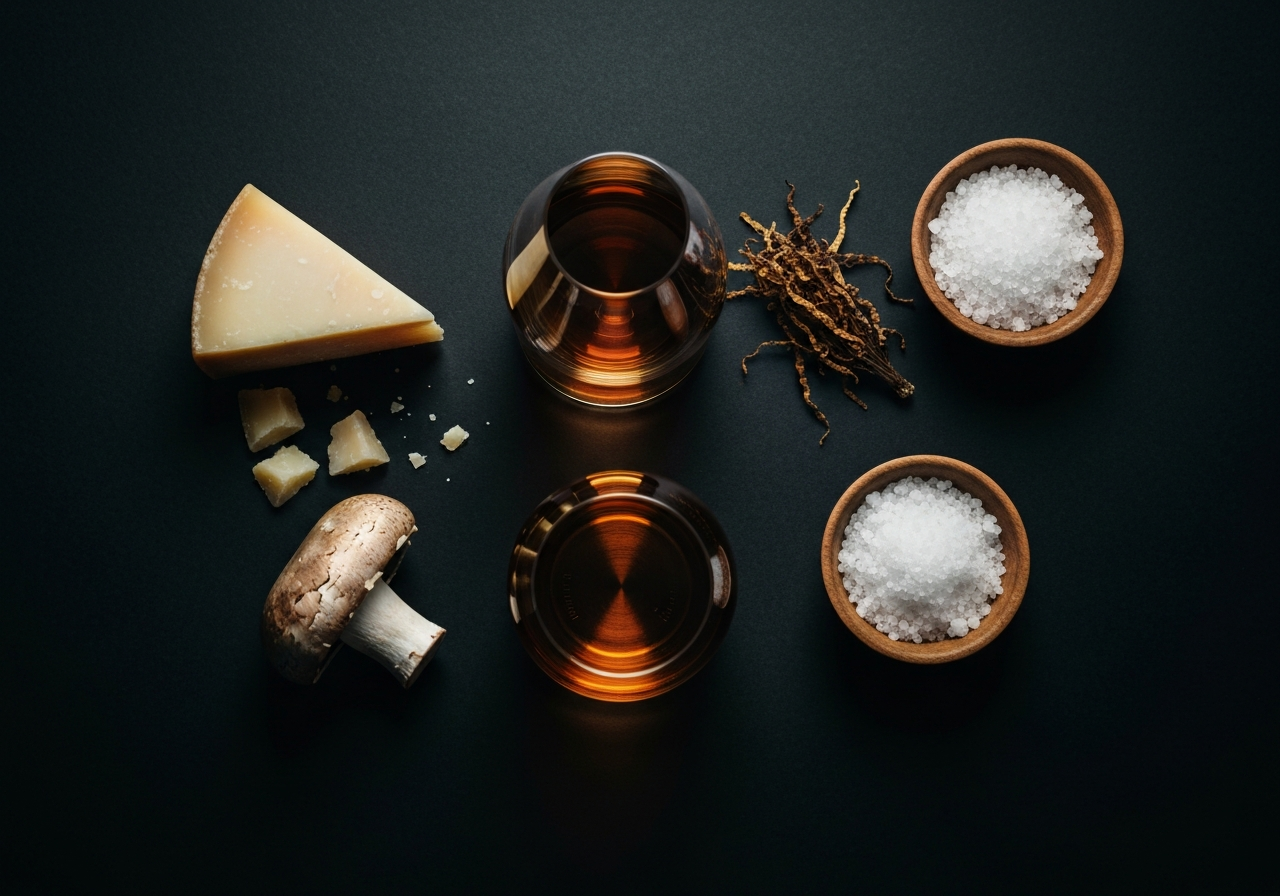
A great practical exercise is comparative tasting using "anchor foods." The next time you sit down with a dram, have a small plate of savory snacks nearby—specifically things like high-quality dark chocolate, aged parmesan cheese, or beef jerky. Take a sip of the whisky, then a tiny nibble of the food, then another sip of the whisky. You’ll be amazed at how the salt in the parmesan or the umami in the jerky "unlocks" hidden savory notes in the spirit. This helps you build a mental library of what "savory" actually feels like in a high-alcohol environment.
Don't be afraid of water. The importance of dilution cannot be overstated when searching for savory complexity. High alcohol heat (ABV) can often mask the delicate fatty acid esters that carry savory flavors. By adding just a few drops of water, you break the surface tension of the liquid and allow those heavier molecules to escape. Often, a whisky that tastes "just like wood" at 50% ABV will suddenly reveal notes of brine, leather, and nuts once it’s been brought down to 40% or 45%.
Glassware selection is another "pro tip." While the Glencairn is the industry standard, its narrow opening concentrates all aromas, including the alcohol. If you’re struggling to find the savory notes, try a wider bowl, like a Copita or even a small wine glass. The increased surface area allows the heavier, savory molecules to aerate more effectively. Finally, start keeping a "Savory Lexicon" in your tasting notes. Stop using generic words like "good" or "smooth." Reach for specific descriptors: petrichor (the smell after rain), brine, charcuterie, miso, or roasted walnuts. The more specific your vocabulary, the more sensitive your palate will become.
Pairing for the Savory Soul: Beyond Cheese and Chocolate
If we are going to treat whisky as a savory spirit, we need to start pairing it like one. The traditional "whisky and chocolate" pairing is fine, but it barely scratches the surface of what’s possible. If you really want to experience the magic of umami in whisky, you need to bring it to the dinner table. The most classic savory pairing is the "Steak and Smoke." A high-phenol Islay malt, like a Laphroaig Lore or an Ardbeg Uigeadail, is the perfect companion to a fatty ribeye or a smoked brisket. The smoke of the whisky mimics the char of the meat, while the alcohol cuts through the fat like a sharp knife.
For maritime whiskies, look to the sea. The brine of a Talisker or an Old Pulteney is a match made in heaven for raw oysters. In fact, many people like to pour a tiny drop of whisky directly into the oyster shell after eating the meat. This "oyster luge" combines the sea liquor with the maritime spirit for an explosion of savory flavor. You can also try these whiskies with smoked salmon or even uni (sea urchin) for a truly decadent umami experience.
If you have a sherried, rancio-heavy whisky, try the "Earth with Earth" strategy. These whiskies pair beautifully with dishes that feature mushrooms or truffles. A mushroom risotto or a truffle-infused pasta will pull out the forest-floor notes in an old Highland Park or Macallan, creating a deeply savory, comforting harmony. Even surprising combinations like blue cheese and olives can work; the salt and funk of the cheese provide a perfect foil for the "good sulfur" and leather notes of a meaty Mortlach.
As we look to the future of whisky, it’s clear that the industry is leaning away from the "smooth and sweet" profile that defined the early 2000s. We are moving toward a world that is "complex and challenging." Distilleries are experimenting with heirloom barley varieties, floor maltings, and ancient distillation techniques to bring more character back into the glass. By embracing the savory, the umami, and the earthy, we aren't just drinking a spirit—we are tasting the history, the science, and the very soil of the distillery. So, next time you pour a dram, look past the sugar. There is a whole world of savory wonder waiting to be discovered.