Mastering Whisky's Finish: Decoding the Lingering Taste
Discover how to appreciate the lasting impression your favorite dram leaves behind.
The Anatomy of a Sip: Defining the Finish
When you pour yourself a dram of a fine single malt or a robust bourbon, your journey typically begins with the nose—the swirling aromas that promise an olfactory adventure. But as any seasoned enthusiast will tell you, the true story of a whisky isn't told when it first touches your lips, nor when it sits on your tongue. The real narrative unfolds after you’ve swallowed. This is what we call the whisky finish, and understanding it is the key to mastering any whisky tasting guide.
In the world of professional tasting, we break the experience down into three distinct phases. First, there is the 'Attack.' This is the initial impact, the first split second where the liquid hits the front of your tongue and your brain registers the basic sweetness or the sharp bite of alcohol. Next comes the 'Palate,' also known as the mid-palate development. This is where the complexity builds, where you might taste orchard fruits, caramel, or cereals as the liquid moves toward the back of your mouth. Finally, we reach the 'Finish.' This is the lingering aftertaste, the 'tail' of the experience that remains once the glass is back on the table.
The finish is often considered the 'soul' of the whisky. It represents the longest-lasting interaction between the spirit and your senses. While the attack and palate might last only seconds, a truly great finish can haunt your senses for minutes or even hours. In professional circles, experts often use the Latin term 'cauda,' meaning tail, to measure this duration. This isn't just poetic license; it's a metric. We measure the cauda in seconds to determine the quality and persistence of the spirit.
If you look at a professional 100-point scoring sheet, you’ll notice that the finish frequently accounts for 20-25% of the total evaluation. Why? Because a whisky that starts brilliantly but disappears instantly is ultimately unsatisfying. It’s like a movie with a great plot that has a rushed, confusing ending. Conversely, a finish can be 'clean'—meaning it fades away gracefully without leaving any off-notes—or it can be 'cloying.' A cloying finish is one that feels overly sticky, sugary, or artificially sweet, often masking the true character of the grain. Learning to distinguish between these textures is the first step in decoding the lingering taste of your favorite dram.
The Science of Lingering: Retronasal Olfaction
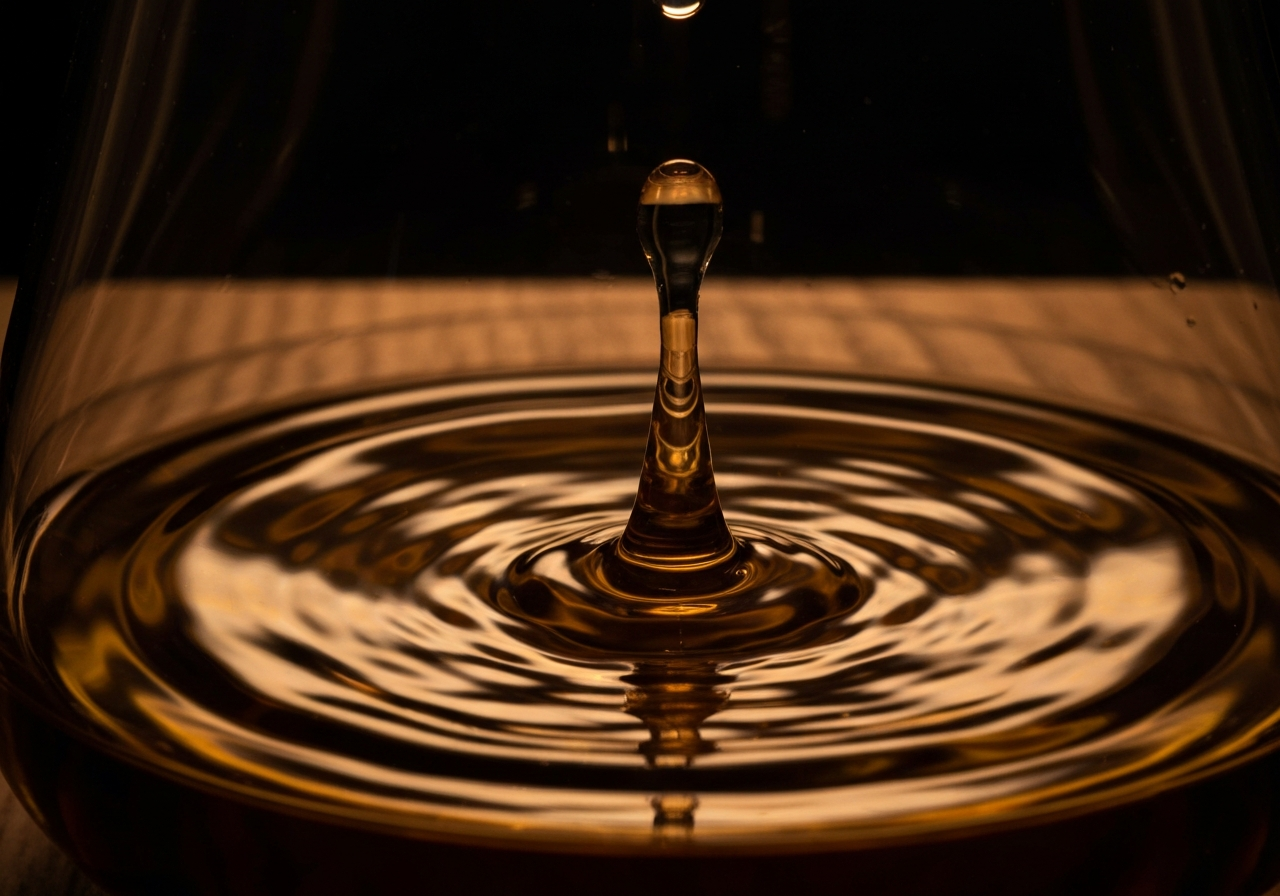
Have you ever noticed that you can 'taste' a whisky much more intensely right after you’ve swallowed it? This isn't your imagination; it's biology. The mechanism at play is called retronasal olfaction whisky enthusiasts often overlook. While 'orthonasal' olfaction is what happens when you sniff the glass, retronasal olfaction is the process of aromas traveling from the back of your throat up into your nasal cavity. When you swallow, the movement of the liquid and the subsequent exhale pushes volatile aromatic compounds toward the olfactory bulb, creating the true 'flavor' of the finish.
Science tells us that saliva and body temperature play crucial roles here. Many of the heavier molecules in whisky, such as long-chain esters and certain phenols, don't vaporize easily at room temperature in the glass. However, once the whisky enters the warm environment of your mouth (roughly 37°C or 98.6°F) and mixes with your saliva, these molecules begin to break down and volatilize. This is why a whisky might smell like simple vanilla on the nose but finish with complex notes of toasted oak or leather.
Furthermore, the presence of lipids and fatty acids in non-chill-filtered whiskies physically extends the duration of flavor. These oils coat the tongue and the mucous membranes of the throat, acting as a reservoir that slowly releases flavor over time. This creates what we call the 'second wave' phenomenon. You might swallow a peated Scotch and initially feel only the warmth of the alcohol. Then, five seconds later, a wave of medicinal smoke hits. Ten seconds after that, a lingering sweetness of dried seaweed appears. This staggered release is the hallmark of a complex spirit.
Many Master Blenders, most famously the legendary Richard Paterson, emphasize 'chewing' the whisky. By moving the liquid around your mouth and through your teeth, you increase the surface area and encourage the release of these heavier compounds. This mechanical action ensures that when you finally swallow, the retronasal release is as powerful as possible. It turns a simple sip into a multi-dimensional sensory event, allowing the whisky mouthfeel to transition seamlessly into a lasting impression.
Duration Dynamics: Short, Medium, and Long Finishes
When you read tasting notes, you’ll frequently see the finish categorized by its length. But what do these terms actually mean in practice? Let’s break down the duration dynamics of the exit. A 'Short' finish is one that vanishes almost immediately—usually within five to ten seconds. This is common in lighter styles, such as certain Lowland malts or young grain whiskies. While it sounds like a negative, a short finish isn't necessarily a flaw. These whiskies are often described as 'sessionable' or refreshing. They are perfect for warm weather or for use in cocktails where you want a clean, crisp conclusion that demands another sip.
A 'Medium' finish is the industry standard for high-quality entry-level malts. It typically lasts between 15 and 30 seconds, providing a gradual fade where the flavors evolve slightly before drifting away. You’ll find this in most 10- or 12-year-old expressions from the Highlands or Speyside. It’s a balanced experience—long enough to be savored, but not so intense that it dominates your palate for the rest of the evening.
Then, we have the 'Long' finish. This is the realm of high-age-statement whiskies and heavily peated beasts. A long finish can last for a full minute, and in some extraordinary cases, several minutes. There is a direct relationship between oak cask influence and duration. As whisky sits in a barrel for decades, it concentrates wood extractives and undergoes slow oxidation, creating a density of flavor that simply takes longer for the palate to process. Similarly, peat smoke (phenols) is notoriously 'sticky' and will cling to your taste buds far longer than fruit or floral notes.
Understanding these dynamics helps you choose the right dram for the moment. If you’re having a quick aperitif before dinner, a short vs long finish might be preferable so it doesn't clash with your meal. However, if you’re sitting by a fire at the end of the night, you want that long, slow-fading glow that allows you to contemplate every nuance of the spirit's journey. The length of the finish is the final punctuation mark on the whisky’s story.
Cask Influence: How Oak Dictates the Exit
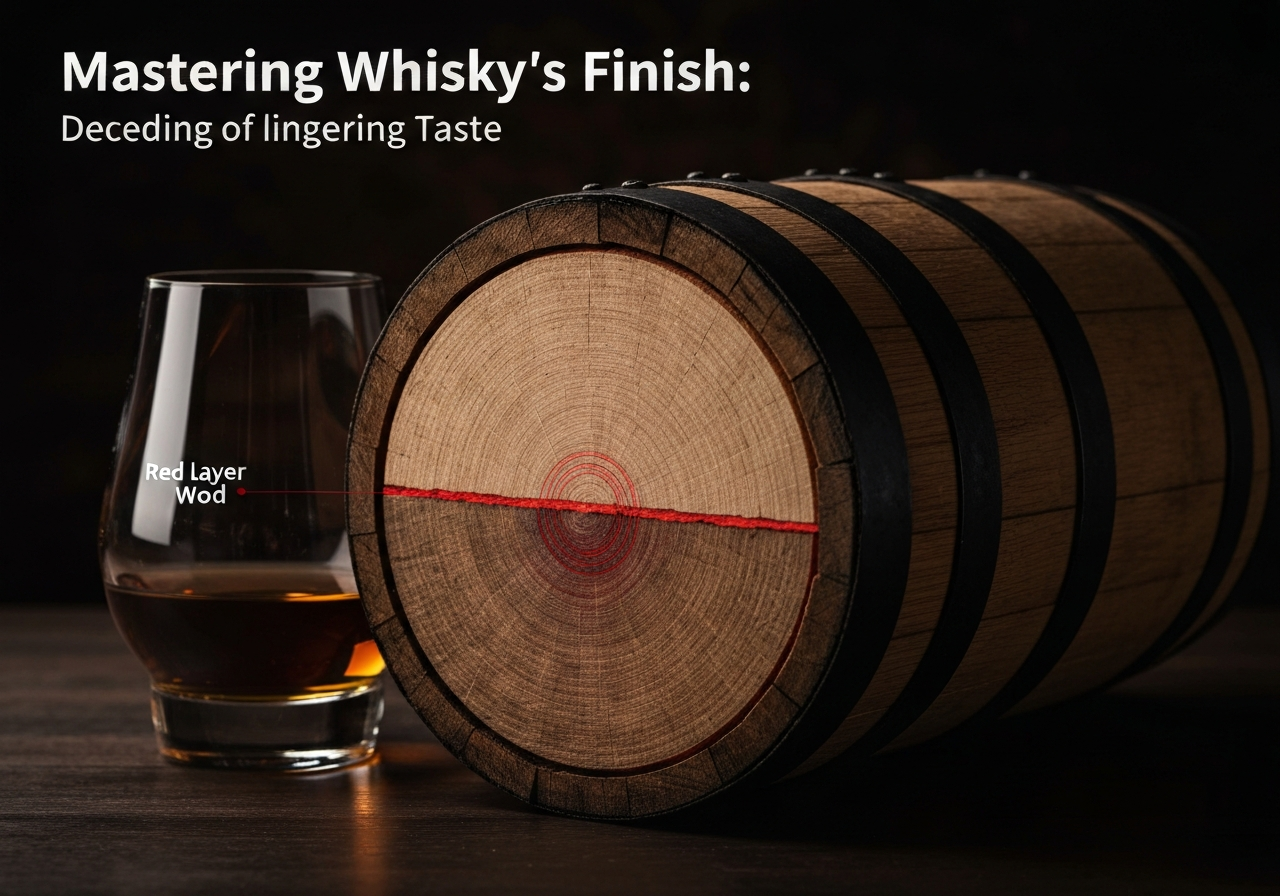
If the distillery's "new make" spirit provides the DNA of the finish, the cask provides the wardrobe. The type of oak used for maturation is perhaps the most significant factor in how a whisky signs off. Let’s start with American White Oak, usually in the form of ex-bourbon barrels. The science here is fascinating: the charring process breaks down the wood’s lignin into vanillin and creates oak lactones. On the finish, this translates to a creamy, sweet, and often coconut-heavy conclusion. It’s a soft, comforting exit that leaves the palate feeling pampered.
Contrast this with European Oak, often used for aging Sherry. European oak is much higher in tannins and polyphenols. These compounds are astringent, meaning they create a physical mouth-drying sensation. The finish of a Sherry-aged whisky is typically dry, spicy, and resinous. You’ll find notes of dark chocolate, bitter espresso, or dried cloves that linger in the "cracks" of your palate. It is a much more aggressive and textured finish than its American counterpart.
Then there is the 'Maillard Reaction.' Just as a steak browns on a grill, the inside of a charred barrel undergoes a chemical reaction that caramelizes wood sugars. This provides the 'toasty' or 'burnt sugar' notes found in the final moments of a sip. If you’ve ever tasted a bourbon that ends with a hint of toasted marshmallows or campfire embers, you’re tasting the charred wood’s legacy. The intensity of this depends heavily on whether the cask is 'first-fill' or 'refill.' A first-fill cask is like a fresh tea bag; it provides a punchy, aggressive finish. A refill cask is more subtle, allowing the distillery's character to shine through with a slow-building, gentle exit.
In recent years, the trend of 'finishing' whisky in secondary casks—like Sauternes, Port, or Madeira—has added a new layer to the exit. These wine casks often leave a 'sticky' or oily texture on the palate. A Port finish, for example, might leave a coating of red berry jam that persists long after the initial spice of the grain has faded. These secondary maturations are specifically designed to manipulate the finish, stretching the flavor profile into new and unexpected territories.
The Proof is in the Proof: ABV and the 'Kentucky Hug'
Alcohol is more than just an intoxicant; it is a vital flavor carrier. This is why many enthusiasts prefer 'Cask Strength' whiskies. Higher ABV (Alcohol By Volume) means the spirit can carry more volatile aromatic compounds. When a whisky is bottled at 40% (the legal minimum), it has been significantly diluted with water, which can sometimes "clip" the finish, making it shorter and less impactful. Whiskies bottled at 46% or higher, particularly those that are non-chill-filtered, retain more of those finish-enhancing oils and esters.
However, there is a fine line between a powerful finish and a painful one. We must distinguish between 'burn' and 'warmth.' A low-quality, young whisky often has a 'burn'—a sharp, stinging sensation on the tongue or at the back of the throat that makes you want to reach for water. A high-quality finish, however, provides what bourbon lovers affectionately call the Kentucky hug. This is a deep, glowing warmth that starts in the back of the throat and radiates down into the chest. It’s a physical sensation of comfort, not irritation.
The impact of dilution is another tool in your tasting kit. Paradoxically, adding a drop of water can sometimes 'open up' a finish. While it might technically shorten the duration by thinning the texture, it can reveal hidden complexities. Water reduces the 'prickle' of the alcohol, allowing delicate floral or herbal notes to emerge in the final moments. It’s like turning down the volume on a loud guitar so you can finally hear the subtle melody of the piano underneath.
We also have to talk about chill-filtration. This is a process where whisky is cooled and filtered to remove fatty acid esters so the liquid doesn't get cloudy when cold. Many purists criticize this because those esters are precisely what give a whisky its "legs" and its body. By removing them, the distillery often thins out the finish and reduces the overall whisky mouthfeel. If you want the longest, most oily finish possible, always look for the words 'Non-Chill Filtered' on the label.

Flavor Categories: Identifying the Nuances
As you develop your palate, you’ll begin to notice that finishes generally fall into a few flavor "buckets." Identifying these nuances is the most fun part of keeping a tasting journal. First, there is the 'Spicy' Finish. This is driven by cinnamic aldehydes and cloves. You’ll find this in high-rye bourbons or whiskies aged in virgin oak. The finish feels like a prickle of black pepper or a warm dusting of cinnamon that stays on the tip of the tongue.
Then there is the 'Medicinal' or 'Phenolic' Finish, the signature of Islay whiskies. Here, compounds like guaiacol and cresols create lingering notes of iodine, sea salt, and campfire smoke. These notes are incredibly persistent; if you drink a Laphroaig or an Ardbeg, you might still taste the smoke when you wake up the next morning! This is a polarizing finish—some love the "smoky hug," while others find it overwhelming.
We also look for the 'Dry' vs. 'Sweet' dichotomy. As we mentioned with European oak, tannins create astringency—a mouth-drying sensation. This is actually a vital component of balance. Without that dryness on the exit, a very sweet malt would feel cloying and one-dimensional. The dryness acts as a "reset button" for your palate. On the flip side, some whiskies leave a residual sugary sweetness, like honey or golden syrup, which is typical of bourbon-matured Speysides.
For the lucky few who get to try exceptionally old whiskies (25 years and older), there is the 'Rancio' finish. This is a rare, savory, and earthy note—think of sautéed mushrooms, old leather, or even a hint of blue cheese. It is a sign of extreme maturation and is highly prized by collectors. Finally, there is the 'Floral' or 'Grassy' finish. Found in whiskies with a lot of copper contact during distillation (like Glenmorangie), this exit remains light, ethereal, and spring-like, reminiscent of lemon zest or fresh-cut hay. It’s a gentle, elegant way for a whisky to say goodbye.
Expert Techniques for Evaluating the Finish
Now that you know what to look for, how do you actually evaluate it like a pro? The first and most important technique is the 'Breath-Out' Method. After you swallow your sip, keep your mouth closed for a second, and then slowly exhale through your nose. This forces the vapors back over the olfactory bulb, maximizing that retronasal detection we talked about earlier. You’ll be amazed at how many flavors appear during that exhale that you missed while the liquid was in your mouth.
Next, try the 'Lip-Smack' Test. After swallowing, smack your lips together a few times. Is the residue watery, or is it thick and "chewy"? Assessing the viscosity and the film left on your tongue and gums tells you a lot about the oil content and the quality of the distillation. A "chewy" whisky almost always has a superior, more satisfying finish.
If you want to be objective, try timing the fade. Use a stopwatch or just count 'Mississippis' from the moment you swallow until the flavor is completely gone. Comparing the length of different drams this way can be very eye-opening. You might find that your favorite "cheap" bottle actually has a longer finish than a more expensive one! Just remember to cleanse your palate between drams. Room-temperature water and plain crackers (like Matzo or water biscuits) are essential to prevent flavor 'overlap,' especially when moving from a peated whisky to a delicate one.
Finally, there is the 'Empty Glass' Test. This is a secret among industry insiders. Once you’ve finished your dram, leave the glass on the table for 10 or 15 minutes. Then, go back and smell the empty glass. Because the alcohol has evaporated, you are left with the heavy base notes—the "skeleton" of the whisky. You’ll often find notes of deep tobacco, heavy molasses, or intense wood smoke. This smell almost always mirrors the deepest part of the finish and tells you the true quality of the wood used for aging.
Conclusion: The Final Impression
In the end, the finish is the most critical element for a truly memorable tasting experience. It is the lasting impression, the final word, and the "goodbye" of the spirit. A whisky can have a beautiful bottle and a stunning nose, but if the finish is short or bitter, the experience feels incomplete. It’s the finish that makes you stop, look at the glass, and smile in quiet appreciation.
I always encourage my fellow enthusiasts to keep a tasting journal. Don’t just write down "tastes like apple." Note the transition! How does the palate turn into the finish? Is it a sudden drop-off, or a long, slow sunset of flavor? There are legendary whiskies out there—like certain 1960s Bowmores or old Macallans—that are said to have an 'eternal finish' that can be detected for hours. While most of us won't be drinking those every day, we can find that same magic in many accessible bottles if we just take the time to look for it.
The best advice I can give you is this: Don’t rush the experience. In our fast-paced world, it’s tempting to take another sip as soon as the first one is down. Resist that urge. The true character of a whisky is often found in the silence after the sip. Let the whisky finish do its work. Let the flavors evolve, fade, and linger. After all, the best parts of life are often the ones that stay with us the longest. What’s the longest finish you’ve ever experienced? Was it a smoky Islay or a decades-old Highland malt? I’d love to hear about the drams that refused to leave your palate in the comments below!