Whiskey & Coffee: A Surprising Pairing Masterclass
Discover how to unlock nuanced flavors by combining your favorite drams with a rich cup of coffee.
The Shared Alchemy of Bean and Grain
There is a quiet magic that happens at the intersection of our morning rituals and our evening wind-downs. If you are reading this on the DramNote app, you likely already appreciate the slow, contemplative nature of a fine spirit. But have you ever noticed how similar your favorite coffee shop feels to your favorite whiskey bar? This isn't a coincidence. The whiskey and coffee pairing tradition stretches back much further than the modern "espresso martini" craze. In the 19th century, coffee houses were the bustling epicenters of trade and gossip, places where merchants would often transition from a morning brew to a glass of fortified spirit as the sun dipped below the horizon. They were rooms defined by the same things that define our craft today: aroma, warmth, and the exchange of ideas.
At their heart, both coffee and whiskey are agricultural products that tell a story of terroir. Just as a single malt scotch pairing can be defined by the salty sea air of Islay or the heather-rich soil of the Highlands, a coffee bean carries the signature of its origin. A Kenyan coffee grown at high altitudes offers a bright, tomato-like acidity and citrus snap, mirroring the sharp, grassy notes of certain unpeated Highland malts. Meanwhile, the grains used in whiskey—whether it’s the spicy rye of Kentucky or the golden barley of Scotland—respond to the soil chemistry and climate of their own homes. Both are harvested, processed, and then subjected to the transformative power of heat.
This is where the true alchemy occurs: the Maillard reaction. This chemical process is the "magic of browning." It’s what happens when you roast a coffee bean to a deep mahogany, and it’s the same reaction that occurs when malted barley is kilned or when a fresh oak barrel is charred over an open flame. This shared chemical heritage creates a bridge of flavor. When we talk about flavor compounds in coffee and whiskey, we are entering a world of immense complexity. A typical cup of specialty coffee contains over 800 volatile aromatic compounds, while a well-aged whiskey boasts over 500. When these two liquids meet, their shared molecules—the ones responsible for notes of caramel, toasted nuts, and smoke—align like a sensory puzzle.
Beyond the science, there is the ritual. We consume both beverages slowly, often using specialized glassware designed to concentrate aromas. They are social lubricants, yet they also invite moments of solitary reflection. Whether you are starting your day with a pour-over or ending it with a dram, you are engaging in a centuries-old practice of honoring the bean and the grain. By pairing them, we aren't just doubling the caffeine or the alcohol; we are expanding the map of what our palates can discover.
The Molecular Bridge: Why the Pairing Works
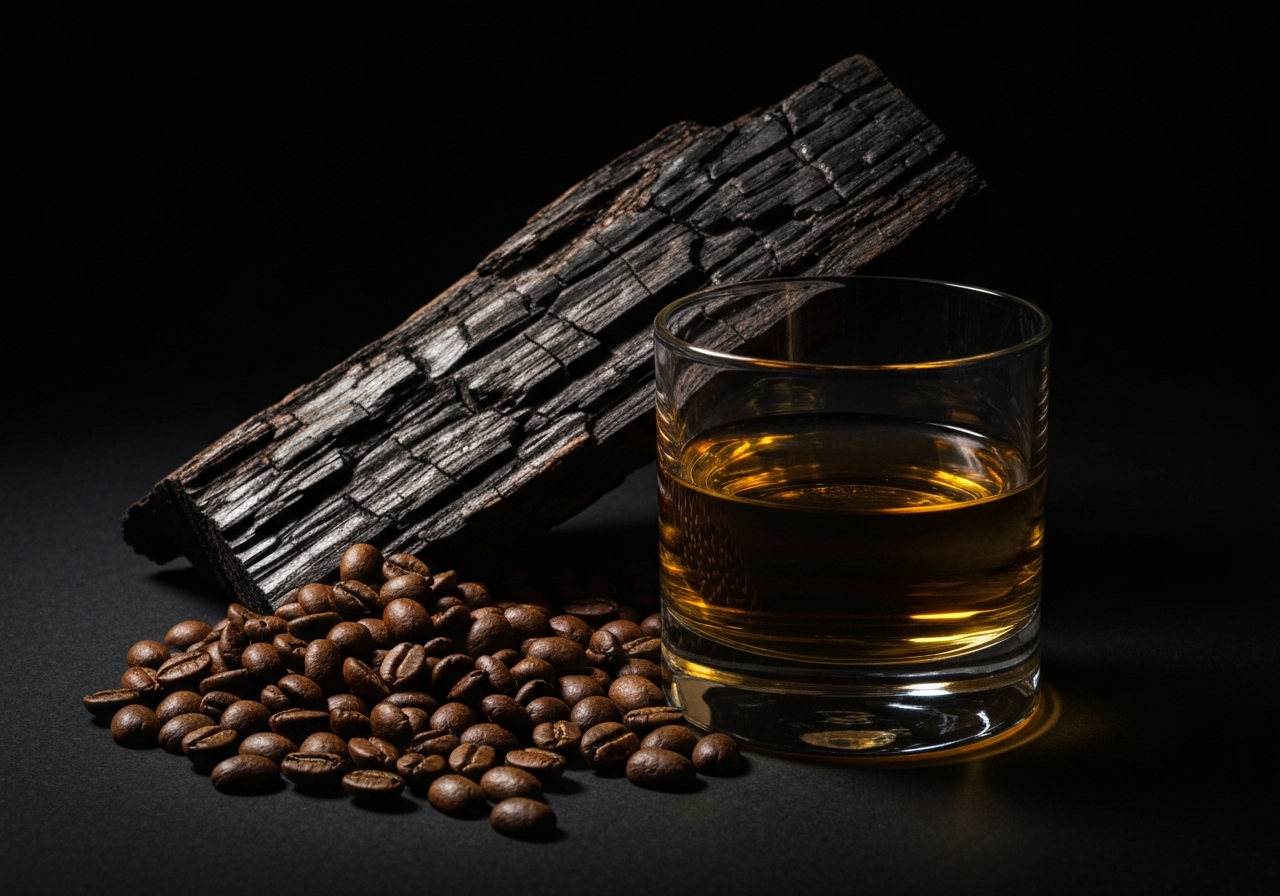
To truly master a whiskey tasting guide, one must understand why certain flavors harmonize while others clash. In the world of sensory analysis, we use the "Bridge Theory." This theory suggests that if two different foods or drinks share key molecular components, they will naturally complement one another. One of the strongest bridges between whiskey and coffee is vanillin. This compound is famously extracted from the lignin in oak barrels during the aging process, giving bourbon its signature vanilla punch. Interestingly, vanillin is also a secondary byproduct in the roasting of certain coffee beans. When you sip a vanilla-forward whiskey alongside a well-roasted coffee, the two liquids reinforce each other, making the flavor more "three-dimensional."
Another major player is guaiacol. If you’ve ever enjoyed a smoky Islay scotch or a dark French roast coffee, you’ve met guaiacol. It provides that distinctive "charred" or "ashy" aroma. By matching a smoky whiskey with a dark roast, you aren't just stacking smoke on smoke; you’re allowing the guaiacol molecules to create a continuous flavor profile that lingers far longer than either would on its own. Furthermore, let’s talk about lipids. Coffee is naturally oily, especially when brewed via a French press or espresso machine. These coffee oils perform a brilliant trick: they coat the tongue and provide a protective layer that softens the "ethanol prickle" or alcohol burn of a high-proof whiskey. This allows your taste buds to bypass the heat and dive straight into the subtle notes of dried fruit, leather, or spice that might otherwise be hidden.
We also have to consider the "Aroma Reboot." Have you ever noticed a jar of coffee beans sitting on the counter at a perfume shop? That’s because the strong, clean scent of coffee resets our olfactory system, preventing "nose blindness." During a long whiskey flight, having a small cup of coffee nearby acts as a sensory palate cleanser. It keeps your nose sharp, ensuring that the fifth dram of the night smells as vibrant as the first. However, one must be careful with tannins and acids. Whiskey is full of wood tannins, and coffee is rich in chlorogenic acids. If both are too high, the result is an unpleasantly "furry" feeling on the tongue. The goal is to balance the bitterness of the coffee with the sweetness of the whiskey’s corn or malt, creating a dry, clean finish rather than a puckering one.
Finally, there’s the temperature factor. When you take a sip of hot coffee followed by a sip of whiskey, the heat from the coffee increases the volatility of the whiskey's esters. Esters are the compounds responsible for fruity and floral smells. By warming the palate, the coffee essentially "powers up" the whiskey’s bouquet, causing the aromas to bloom more intensely inside your mouth and nasal cavity. It’s a physical transformation that turns a simple drink into a full-body experience.
Light Roasts & Highland Malts: The Zesty Brightness
For those who prefer the lighter, more elegant side of the spirits world, we look to the "Third Wave" of coffee. This movement focuses on light roasts—sometimes called Cinnamon or New England roasts. These beans are dropped from the roaster before the second crack, preserving the intrinsic flavors of the bean's origin rather than the flavor of the roast itself. The result is a cup that is high in acidity, floral in aroma, and often has a tea-like, delicate body. This is the perfect partner for an unpeated Speyside or Highland single malt.
Think of a classic 10-year-old Glenmorangie or a Linkwood matured in bourbon casks. These whiskies are celebrated for their notes of green apple, honeysuckle, and lemon zest. When paired with a light-roast Ethiopian Yirgacheffe or a rare Panamanian Geisha coffee, a fascinating "Acid-Sugar Balance" occurs. The coffee’s bright, berry-like acidity cuts through the honeyed, malty sweetness of the scotch, much like a squeeze of lemon brightens a rich piece of shortbread. It’s a pairing that feels "uplifting" rather than heavy, making it an ideal choice for a weekend afternoon.
The single malt scotch pairing with light coffee is a masterclass in subtlety. In these lighter pairings, you can actually taste the "estery" fruitiness. You might find that the coffee brings out a hidden notes of apricot in the whiskey, while the whiskey reveals a jasmine floral note in the coffee. This mirrors the shift we see in the whiskey industry today, where more enthusiasts are seeking out "distillery character"—the unique flavors produced during fermentation and distillation—rather than just the heavy vanilla and caramel of the wood. It’s about transparency and nuance, a conversation between two delicate liquids that refuse to be drowned out by smoke or oak.
Medium Roasts & Bourbon: The Classic Caramel Connection
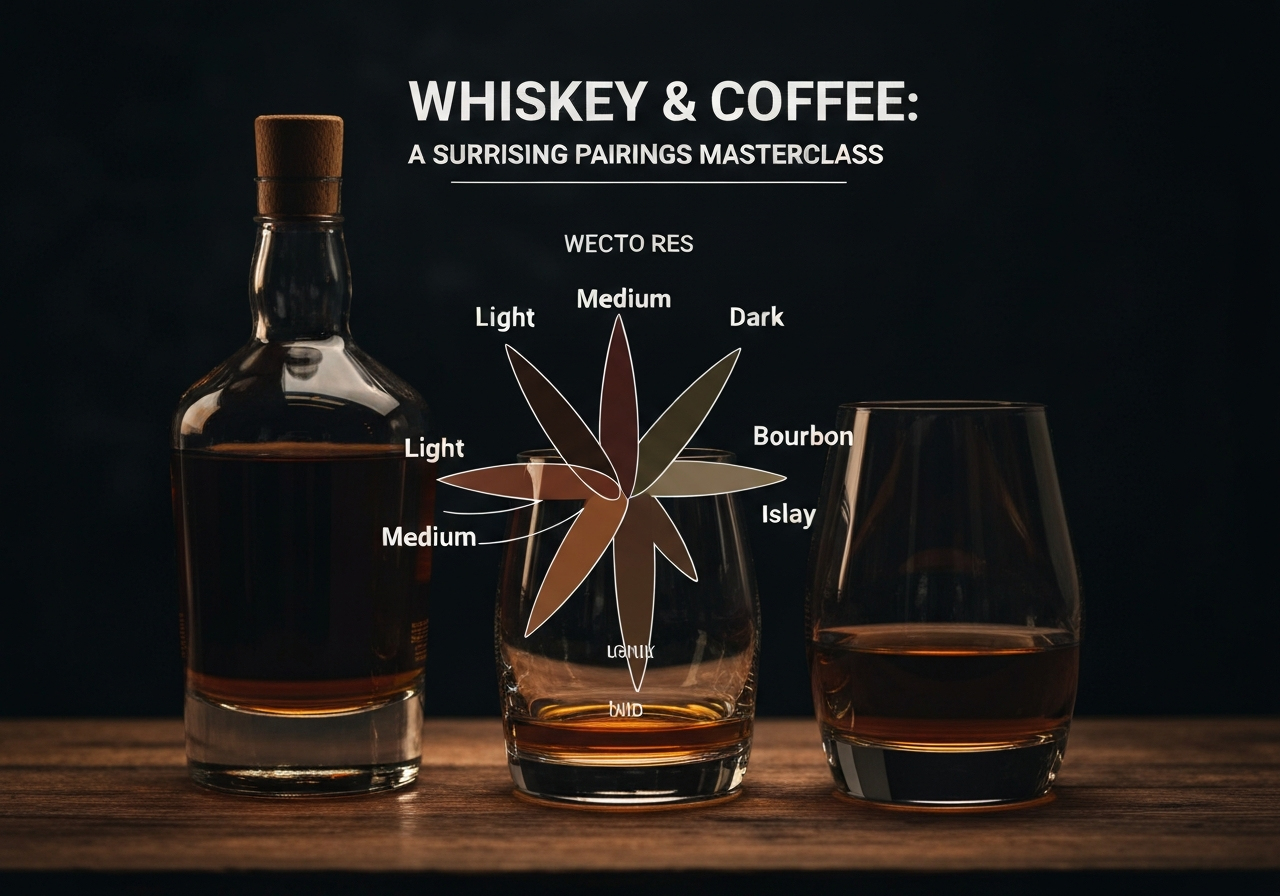
If light roasts are about brightness, medium roasts (often called City or Full City roasts) are about comfort. This is the "Goldilocks" zone of coffee roasting, where the acidity begins to mellow and the sugars in the bean begin to caramelize, leading to notes of milk chocolate, toasted almonds, and brown sugar. Because of this, a medium roast is arguably the best coffee for bourbon. American Bourbon is legally required to be aged in new, charred oak barrels. These barrels are rich in hemicellulose, which breaks down into wood sugars when charred, giving bourbon its iconic caramel and toffee profile.
When you pair a nutty Brazilian Cerrado or a chocolatey Guatemalan coffee with a high-rye bourbon like Bulleit or Old Grand-Dad, you create a "spiced praline" effect. The rye’s peppery kick provides a beautiful contrast to the coffee’s cocoa-heavy base, while the shared caramel notes tie the two together in a seamless knot. There is also a "Mouthfeel Match" to consider here. A medium-roast coffee usually has a creamy, syrupy body that perfectly mimics the oily, mouth-coating texture of a wheated bourbon, such as Maker’s Mark or Larceny. The lack of harsh rye spice in wheated bourbons allows the creamy chocolate notes of the coffee to take center stage.
Statistically, over 60% of coffee drinkers in the United States prefer a medium roast, and bourbon remains the most popular whiskey style in the country. This makes the medium roast and bourbon duo the most accessible entry point for home pairing experiments. You don’t need a specialized palate to "get" this pairing; the moment the toasted nuttiness of the coffee hits the vanilla sweetness of the bourbon, your brain recognizes it as a classic combination. It’s the liquid equivalent of a warm chocolate chip cookie.
Dark Roasts & Peated Scotch: Embracing the Smoke
Now we move into the territory of the bold and the brave. Dark roasts—French, Italian, or Spanish roasts—are characterized by the carbonization of the bean's sugars. The flavors here are intensely smoky, bitter, and reminiscent of dark chocolate or even black licorice. To find a partner for such a heavy-hitter, we must go to the rugged coastlines of Islay. Pairing a dark roast with a heavily peated scotch like Laphroaig, Ardbeg, or Lagavulin is an exercise in "Earth and Ash."
The logic here is one of strength. A delicate light roast would be absolutely obliterated by the medicinal, phenolic punch of a peated malt. However, a dark roast has the structural integrity to stand up to it. The bitterness of the carbonized coffee sugars provides a grounding base for the volatile iodine and seaweed notes of the whiskey. My personal favorite is a Sumatran Mandheling coffee paired with a coastal malt. Sumatran beans are known for their "forest floor" and earthy qualities, which harmonize beautifully with the organic, decomposed vegetable matter that makes up peat. Together, they create a "campfire and brine" experience that feels ancient and primal.
This is also where the "Contrast Strategy" comes into play. Sometimes, a young, peated whiskey can feel a bit "thin" or overly sharp. The heavy body of a dark-roasted coffee provides a weighted blanket of flavor that rounds out the whiskey's edges. There is a deep, factual link here, too: many of the best coffee-growing regions feature volcanic soil, which is rich in sulfur and minerals, much like the peat bogs of Scotland are rich in ancient organic compounds. When you drink them together, you are tasting the very essence of the earth.
Cold Brew & Rye Whiskey: A Modern Texture Play
In the last decade, cold brew has revolutionized how we think about coffee. Unlike hot coffee, which uses heat to extract flavors (and acids), cold brew relies on time—usually 12 to 24 hours of immersion. This chemical difference is vital for a whiskey and coffee pairing. Cold brew is significantly lower in acidity and bitterness but much higher in perceived sweetness and chocolate notes. This makes it a fascinating foil for the spicy, assertive nature of Rye Whiskey.
Rye whiskey, like WhistlePig or Rittenhouse, is known for its "bite"—notes of black pepper, clove, and mint. When you pair this with a smooth, chocolatey cold brew, the coffee acts as a velvet glove for the whiskey’s iron fist. The lack of acidity in the cold brew means there is no clashing with the rye's spice. This is precisely why cold brew has become the secret weapon for coffee cocktails. If you’re making a Coffee Old Fashioned, using cold brew instead of espresso ensures that your drink remains clear, bright, and free from the muddy bitterness that occurs when hot coffee is chilled.
Then there is the "Up and Down" effect. Cocktail culture often whispers about the synergy between the alertness of caffeine and the relaxation of alcohol. With cold brew and rye, this effect is pronounced. The spicy rye wakes up the palate, the cold brew provides a clean caffeine hit, and the overall experience is one of focused relaxation. Pro tip: If you’re sipping a high-proof rye alongside your cold brew, try freezing some of the coffee into ice cubes. As they melt, they’ll slowly infuse the whiskey with flavor rather than diluting it with water. It’s a game-changer for a slow summer evening on the porch.
The Deconstructed Irish Coffee: A Tasting Protocol
While we all love a classic Irish Coffee topped with heavy cream, I want to advocate for the "Deconstructed" method. Mixing the two liquids together can sometimes mask the very complexities we’re trying to find. To truly master this whiskey tasting guide, try the side-by-side protocol. This allows you to appreciate each liquid as a solo artist before they perform as a duet. It’s a more mindful way to drink that respects the craftsmanship of both the roaster and the distiller.
The step-by-step guide is simple:
- The Coffee Sip: Take a small sip of your coffee first. This warms the palate and introduces the primary roast notes (acidic, nutty, or smoky).
- The Whiskey Sip: Take a tiny sip of the whiskey. Notice how the warmth from the coffee helps the alcohol evaporate, carrying those "top notes" of fruit and flower to your nose.
- The Combined Sip: Take another sip of coffee, and while the flavor is still on your tongue, take a sip of whiskey. This is the moment of transformation where the "third flavor" emerges.
Don't be afraid to add a drop of water to your whiskey during this process. A single drop can break the surface tension and release "hydrophobic" aromatic molecules that the coffee might otherwise overwhelm. The heat of the coffee also serves a functional purpose: it helps "melt away" the heavy fats and oils of an especially oily dram (like a pot still Irish whiskey), essentially scrubbing your tongue clean and preparing it for the next complex layer of flavor.
This protocol pays homage to the legendary Joe Sheridan, who created the original Irish Coffee in 1943 at Foynes Port. His goal was to warm up cold travelers arriving by sea, but his genius was in the balance—the heat of the coffee, the sweetness of the sugar, and the bite of the whiskey. By deconstructing it, we are just looking at Sheridan’s masterpiece through a magnifying glass.
Global Traditions: How the World Drinks the Pair
While we often think of whiskey and coffee as a Western pairing, the world has many ways of "correcting" their caffeine. In Spain, the Carajillo is a beloved staple. While traditionally made with brandy and espresso, modern Spanish bars are increasingly using spicy local whiskies or dark rums to create a drink that is as much about the aroma as it is about the kick. The key to a great Carajillo is the "quemado"—burning the spirit with sugar and lemon peel before adding the coffee.
In Italy, the Caffè Corretto is a morning institution. "Corretto" means "corrected," and it involves adding a splash of grappa or malt whiskey to a shot of espresso. It’s a testament to the idea that a little bit of spirit can balance the intensity of a morning brew. Meanwhile, in Scandinavia, they have the Karsk. This is a traditional, somewhat rural drink with a hilarious preparation method: you place a coin at the bottom of a cup, pour in coffee until you can no longer see the coin, and then pour in moonshine or whiskey until the coin becomes visible again. It’s a rough-and-ready pairing, but it speaks to the historical need for warmth in cold climates.
Perhaps the most meticulous approach comes from Japan's siphon coffee culture. Japanese blenders often look at coffee with the same reverence they afford their world-class whiskies. In high-end Tokyo bars, you might find a bartender pairing a 17-year-old Hibiki with a specific single-origin bean brewed in a vacuum siphon to ensure the most delicate flavor extraction possible. This global perspective shows us that whether it’s a coin in a cup or a precision-engineered siphon, the marriage of whiskey and coffee is a universal language of comfort.
Setting the Stage: How to Host a Pairing at Home
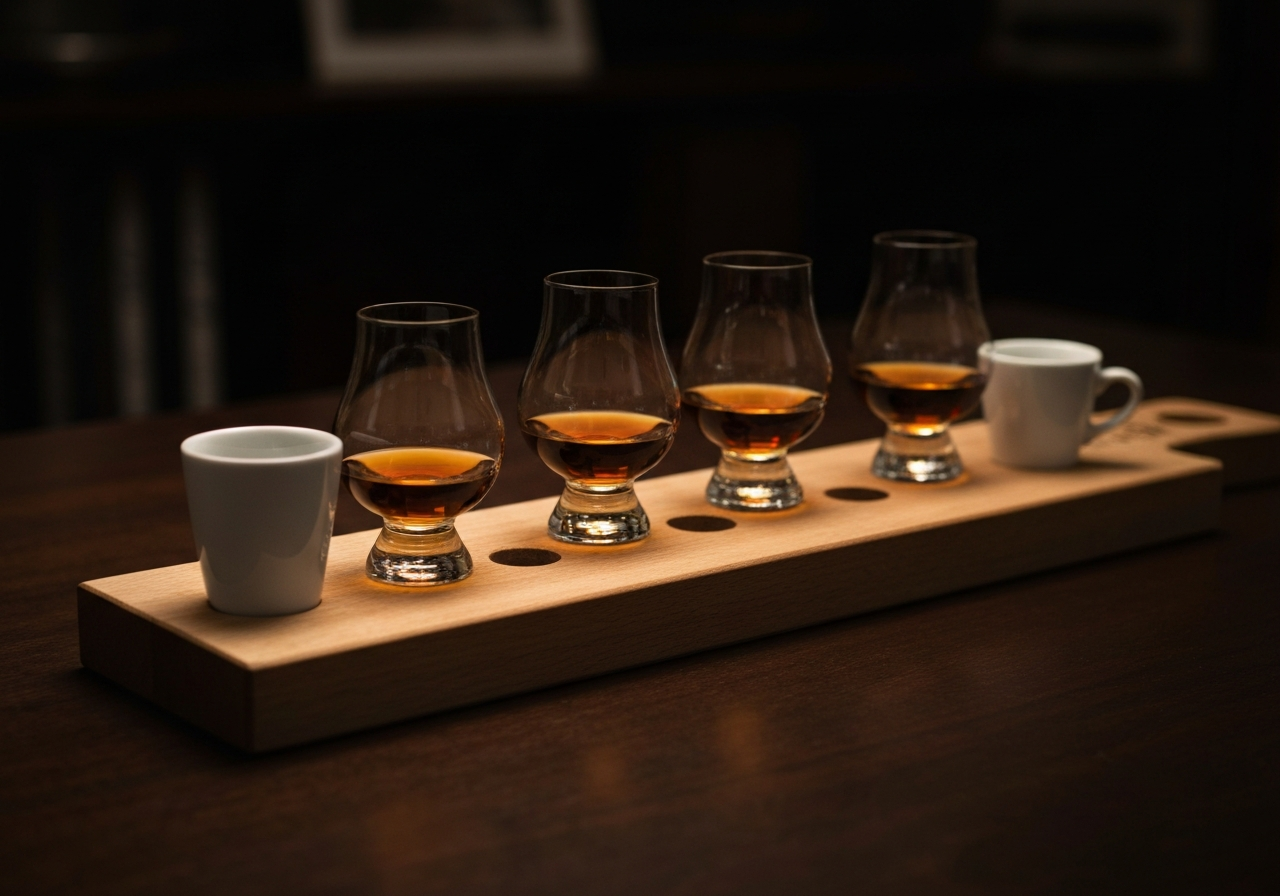
Ready to host your own whiskey and coffee pairing session? It’s easier than you think, but a little bit of preparation goes a long way. First, let's talk about the gear. You’ll want proper glassware: a Glencairn or a small tulip glass for the whiskey to concentrate those aromas, and a high-quality ceramic cup for the coffee to retain heat. Avoid plastic at all costs, as it can impart "off" flavors that ruin the delicate volatile compounds we're trying to highlight.
I recommend the "Flight of Three" strategy for beginners. Start with a light/floral pairing (Highland Malt + Ethiopian Coffee), move to a medium/sweet pairing (Bourbon + Guatemalan Coffee), and finish with a dark/smoky pairing (Islay Scotch + Sumatran Coffee). This progression prevents "palate fatigue"—if you start with the heavy smoke, you won't be able to taste the delicate floral notes of the lighter drinks later on. Keep some neutral palate cleansers on hand, like plain crackers or sourdough bread, and plenty of room-temperature water.
"The key to a successful pairing isn't finding two things that taste the same; it's finding two things that make each other better."
Lastly, keep your portions small. You aren't trying to finish a full pot of coffee or a double pour of whiskey. Aim for 3oz coffee pours and 0.5oz whiskey pours. This keeps the focus on the flavor analysis rather than the effects of the caffeine or alcohol. As you sip, try "Nosing" both simultaneously—hold the coffee in one hand and the whiskey in the other, moving them back and forth under your nose. When you find that "aromatic harmony" where the two scents blend into something new, you’ve found a winning pair. Happy tasting, and don't forget to log your discoveries in the DramNote app!