Whiskey's Maturation Magic: Beyond The Cask's Influence
Explore the subtle yet significant factors that impact a spirit's journey from still to bottle, beyond just the wood.
The Maturation Myth: Why Wood Isn't the Only Story
If you have ever spent five minutes in a distillery tour or browsed a few whiskey blogs, you have likely heard the golden rule of whiskey maturation: the wood is responsible for 60% to 80% of the final flavor profile. It is a compelling statistic, isn't it? It places the oak cask as the hero of the story—the sturdy, charred vessel that transforms a clear, fiery "white dog" into the liquid gold we enjoy in our Glencairn glasses. But as much as we love to fetishize the barrel, focusing solely on the staves is like crediting a beautiful house entirely to the lumber while ignoring the neighborhood it was built in. To truly understand the terroir of whiskey, we have to look past the wood and into the very air the barrel breathes.
Think of whiskey maturation as a three-pillar structure. First, you have the distillate, which is the spirit's DNA—the fruity, cereal, or peaty notes born in the still. Second, you have the wood, which we can call the "house." This provides the structure, the vanillins, the tannins, and the color. But the third pillar, often the most overlooked, is the barrel aging environment—the neighborhood. A cask of the exact same spirit, made from the same oak tree, will taste fundamentally different if it spends ten years in a damp Scottish cellar versus a scorching Texas warehouse. This is what we call the "Maturation Terroir."
Historically, distillers were the first to notice this phenomenon. Long before we had chemical sensors and climate-controlled labs, cellar masters in the 18th and 19th centuries realized that barrels tucked away in the back corner of a stone warehouse developed different characters than those near the door. They recognized that the spirit wasn't just sitting there; it was interacting with its surroundings. This leads us to the concept of "Passive vs. Active" maturation. Wood is the filter, but the climate is the pump. Changes in temperature and pressure force the spirit into the wood (active) and then pull it back out, while the slow oxidation through the pores of the oak (passive) allows for long-term mellowing. In this post, we are going to dive deep into the air, the earth, and the architecture that surrounds the barrel to uncover the hidden magic of maturation.
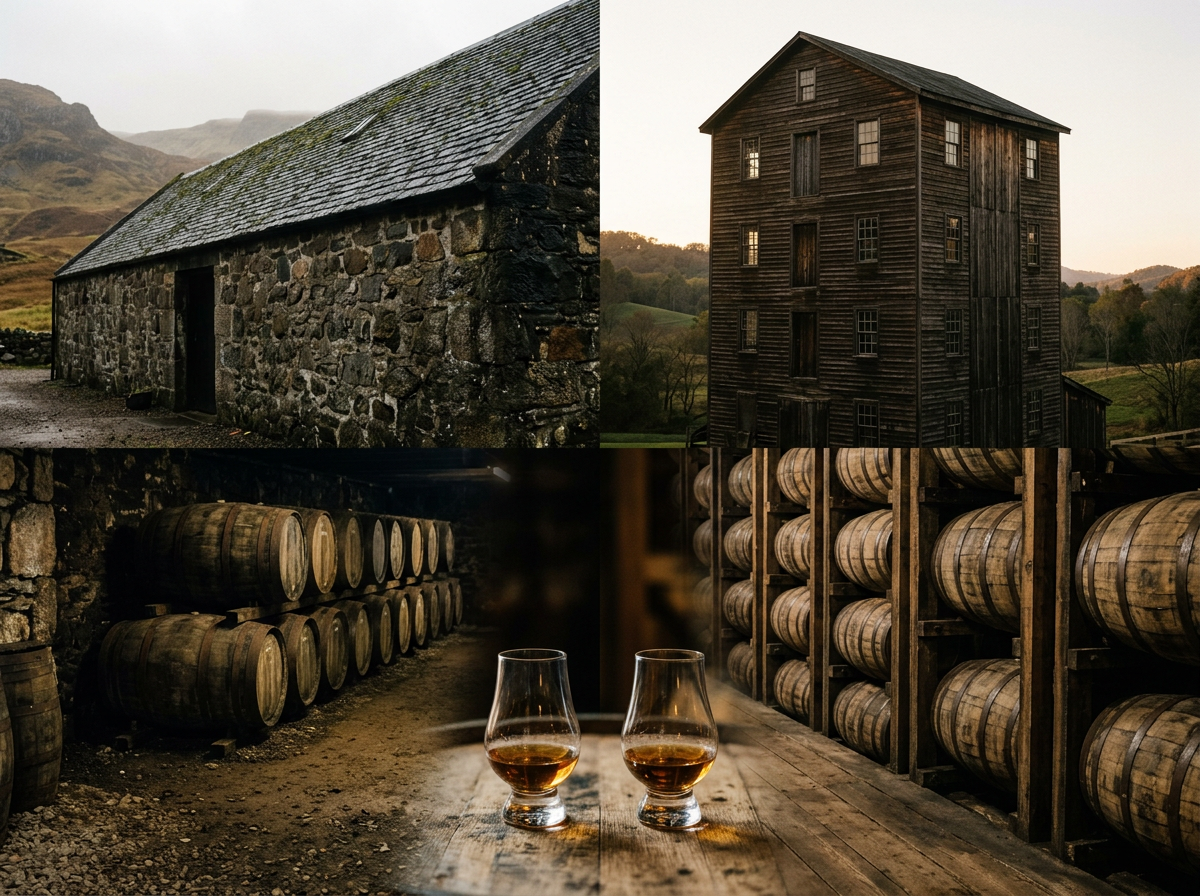
The Architecture of Aging: Dunnage vs. Racked Warehouses
The first major factor in environmental influence is the building itself. In the world of whiskey, there is a legendary divide between two primary styles of storage: the traditional "Dunnage" warehouse and the modern "Racked" or palletized warehouse. The choice between these two isn't just about logistics; it’s a choice about how the whiskey will breathe for the next decade.
If you visit an old distillery in the Scottish Highlands, you’ll likely step into a dunnage warehouse. These are beautiful, low-slung buildings with thick stone walls and, most importantly, earthen floors. The ceilings are low, and the barrels are rarely stacked more than three high. Because of the thermal mass of the stone and the moisture held in the dirt floor, dunnage warehouses maintain a remarkably consistent, cool, and damp temperature year-round. There is a specific smell to these places—a mix of wet earth, old oak, and evaporating alcohol. Because the air is stagnant and moist, the whiskey matures slowly and gently. The whiskey humidity effects here tend to favor the retention of delicate esters, leading to spirits that are often described as elegant and refined.
In stark contrast, we have the "Racked" warehouses common in the United States and larger Scottish operations. These are often multi-story giants built of brick, wood, or even corrugated steel. Here, barrels are stored on their sides in "ricks" that can reach seven or nine stories high. These buildings are designed to encourage airflow. They utilize "chimney effects," where hot air rises through the floors, creating a constant cycle of movement. Unlike the sleepy, cool environment of a dunnage warehouse, a racked warehouse is a dynamic, shifting ecosystem. Depending on where a barrel is placed—next to a drafty window, near the center of the building, or on the top floor—it will experience a completely different maturation journey. This architecture creates "micro-climates" within a single building, ensuring that no two barrels ever age quite the same way.
The Vertical Gradient: Why the Floor Number Matters
When we talk about racked warehouses—particularly the massive "rickhouses" of Kentucky and Tennessee—we have to talk about the physics of heat. Heat rises, and in a massive seven-story structure, the rickhouse temperature gradients can be staggering. On a humid Kentucky summer day, the temperature difference between the ground floor and the top floor can exceed 30 degrees Fahrenheit. This vertical shift creates a flavor hierarchy that blenders use like a spice rack.
Barrels sitting on the top floors are the "hot heads." Because they are exposed to the most intense heat, the liquid inside expands aggressively, pushing deep into the charred oak staves. This results in rapid extraction of wood sugars, tannins, and color. These "top floor" whiskeys are often bold, spicy, and wood-forward. Think of brands like Booker’s Bourbon, which famously sources barrels from the center and upper floors to achieve its signature punchy profile. On the flip side, the bottom floors are the "cool cats." They stay relatively chilly and stable, leading to a much slower interaction with the wood. These barrels often produce whiskey that is lighter, more floral, and more "distillate-forward," as the wood hasn't had the chance to dominate the spirit.
This brings us to the "Honey Barrel" phenomenon. Every master blender has a "sweet spot" in their warehouse—usually the middle floors, where the temperature is high enough to encourage maturation but not so high that it becomes over-oaked. These middle-tier barrels are often where the award-winning single barrel releases are found. Distilleries like Buffalo Trace have taken this study to the extreme with their experimental "Warehouse X," a structure designed specifically to test how different levels of light, airflow, and temperature at various heights affect the final product. When you see a "Floor Number" on a bottle of high-end bourbon, it isn't just trivia; it’s a roadmap to the flavor profile inside.
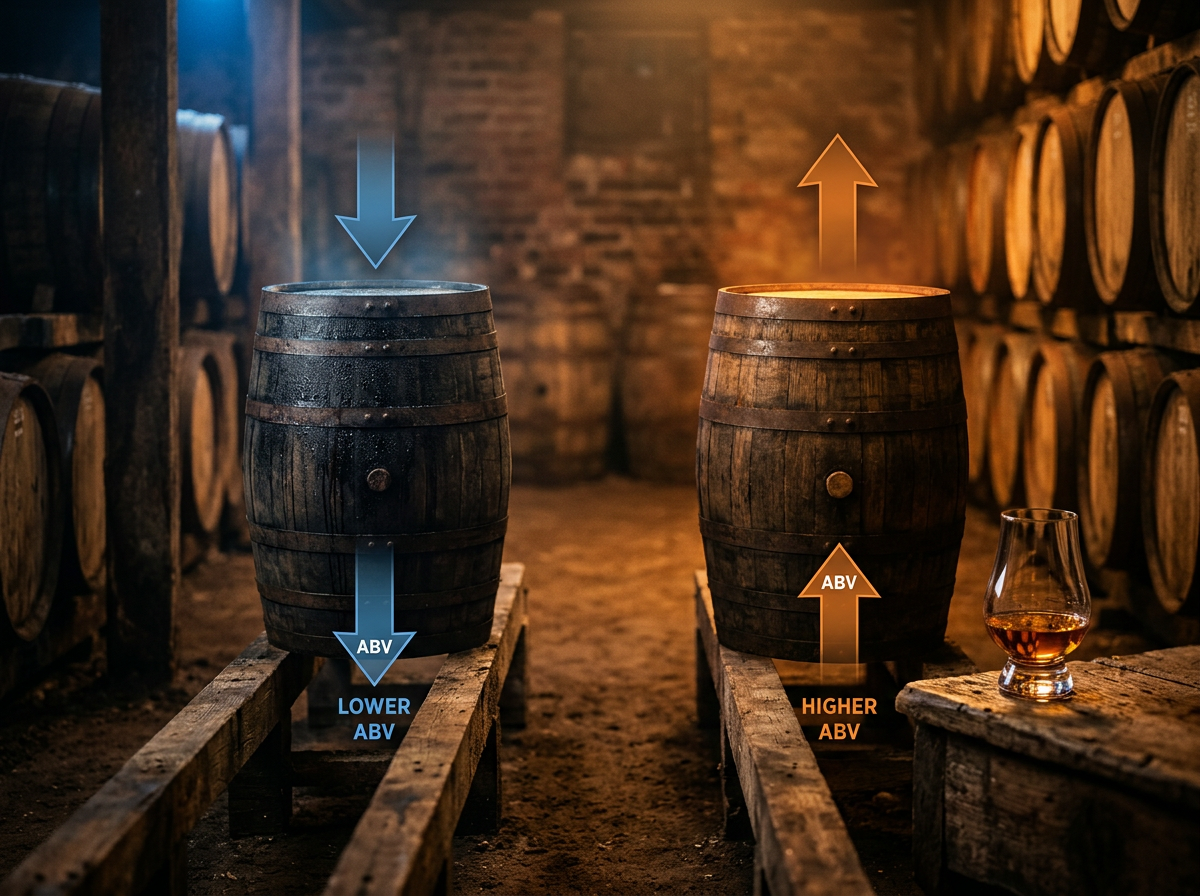
Humidity and the Proof Paradox
One of the most fascinating aspects of whiskey maturation is the relationship between humidity and alcohol by volume (ABV). Most people assume that as whiskey ages, the ABV always goes down. In Scotland and Ireland, this is generally true. Because the climate is consistently damp and cool, water molecules in the air are abundant, meaning the water inside the barrel is less likely to evaporate. However, the smaller ethanol (alcohol) molecules can still escape through the wood. Consequently, the alcohol evaporates faster than the water, and the proof of the spirit drops over time, leading to a "mellowing" effect that defines the Scotch profile.
However, if you move to a dry climate like Kentucky, Texas, or parts of Australia, the "Proof Paradox" kicks in. In low-humidity environments, the thirsty air outside the barrel wants moisture. Since there is very little water in the air, the water inside the barrel evaporates much faster than the alcohol. This causes the concentration of alcohol to actually increase over time. You might put a bourbon into the barrel at 125 proof and find it has climbed to 135 proof after eight years. This dry-climate aging creates a dense, concentrated, and intense spirit that feels heavy on the palate.
The angels share statistics also reflect this humidity divide. In the damp Highlands of Scotland, the "Angel’s Share" (the amount lost to evaporation) is typically around 2% per year. In the arid, high-heat regions of the American West or India, that loss can jump to 5% or even 10% annually. While this is a heartbreak for the distillery's accountants, it drastically changes the chemistry of the spirit. Higher moisture levels in the air can slow down certain oxidative reactions, allowing fruit and floral notes to develop slowly, whereas dry air accelerates the development of heavy caramels and dark chocolates. Humidity isn't just about how the warehouse feels; it's about whether your whiskey is getting stronger or softer as it sleeps.
Altitude and Atmospheric Pressure: The 'Breathing' Barrel
We often talk about what's in the air, but what about the weight of the air? Atmospheric pressure acts like a giant, invisible pump on every barrel in the warehouse. This is known as the "Bellows Effect." When barometric pressure is high, the air pushes the spirit into the wood; when the pressure drops, the spirit is pulled back out into the belly of the cask. In regions with frequent weather shifts, this constant "breathing" accelerates the interaction between the liquid and the oak.
Now, take that concept and move it to a high-altitude distillery like Breckenridge in Colorado (situated at 9,600 feet) or Amrut in the high plains of Bangalore, India. At these heights, the air is thinner and the pressure is lower. This lower pressure actually changes the boiling point of various alcohols and compounds within the whiskey. It also intensifies the "breathing" cycle. In the thin air of the mountains, the interaction between the spirit and the wood is more aggressive, often resulting in a "mountain whiskey" that tastes significantly older than its age statement would suggest. The lower oxygen levels at high altitudes can also influence the rate of esterification—the chemical process that creates those lovely fruity and floral aromas.
Some distillers are even trying to "hack" this pressure-based maturation. Tuthilltown Spirits in New York famously experimented with using massive bass-frequency speakers in their warehouses to vibrate the barrels. The idea was that the physical sound waves would create micro-pressure changes, physically agitating the spirit and forcing it to interact with the wood more frequently. Whether it's the natural pressure of a mountain peak or the artificial vibration of a sub-woofer, the "breathing" of the barrel is a crucial, invisible hand in the maturation process.
The Saline Influence: Coastal and Maritime Maturation
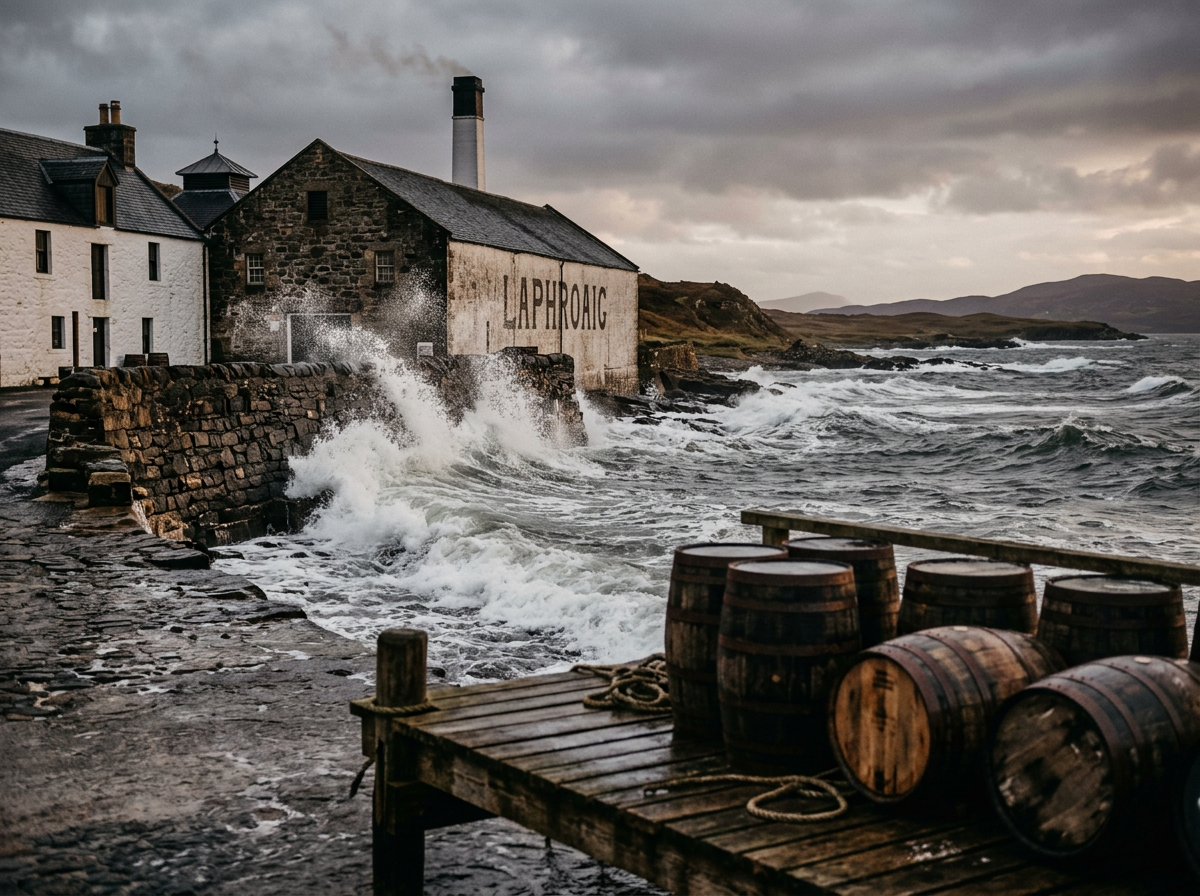
There is an old romantic notion that barrels aging on the coast of Islay "breathe in the sea air," leading to the briny, salty notes we find in whiskies like Laphroaig or Lagavulin. But does salt actually get inside the barrel? Scientifically, salt (sodium chloride) doesn't evaporate, so it can't literally float through the air and permeate the wood in its mineral form. However, the reality of maritime maturation is far more interesting than the myth.
Distilleries situated on the shoreline are exposed to constant maritime aerosols—microscopic droplets of seawater mist. These aerosols coat the exterior of the casks. Over years of whiskey maturation, these salts and minerals can be absorbed into the outer layers of the oak. More importantly, the high-humidity, salt-laden air acts as a catalyst for specific types of oxidation. The presence of sodium and magnesium ions in the surrounding environment can subtly alter the chemical reactions happening inside the cask, accentuating medicinal and phenolic notes. This is why a peated whiskey aged inland will often taste "earthy" or "smoky," while the same spirit aged by the sea will taste "briny" or "medicinal."
Take Old Pulteney, for example, often called "The Maritime Malt." Their warehouses in Wick are buffeted by the North Sea. Even though their standard expressions are unpeated, many tasters swear they find a distinct "brine" or "sea spray" finish. This isn't just psychological; it's the result of a decade-long interaction with a very specific, moisture-heavy, saline environment. The cool coastal air prevents the heavy extraction of wood sugars, allowing these subtle, atmospheric influences to shine through. When you sip a maritime malt, you are quite literally tasting the North Atlantic's impact on the oak.
Tropical Maturation: Aging in Fast-Forward
If Scotland is the slow-and-steady tortoise of the whiskey world, then tropical aging is the hare. Over the last decade, tropical whiskey aging has taken the industry by storm, led by pioneers like Kavalan in Taiwan and Amrut in India. In these climates, the intense heat and high humidity act like a turbocharger for maturation. It is often said that one year of aging in Taiwan is equivalent to three or four years in Scotland.
But it's not just about speed; it's about the type of extraction. In a tropical climate, the high heat extracts color and tannins from the wood at a blistering pace. A four-year-old Kavalan can look as dark and mahogany-rich as a forty-year-old Speyside malt. However, there is a catch: integration. While heat is great at pulling flavors out of the wood, the "mellowing" and "rounding off" of the spirit's sharp edges usually require the slow passage of time. Tropical distillers have to find the perfect "peak" where the wood extraction is high but the spirit hasn't become overly bitter or "tannic."
This "fast metabolism" of whiskey comes at a high price—the Angel's Share in these regions is staggering. Losing 12% to 15% of the barrel's volume every year is common. By the time a whiskey reaches ten years old in a tropical climate, there might be nothing left in the barrel but a few liters of highly concentrated liquid. This has forced these distilleries to focus on "quality over quantity," bottling their spirits at a young age when the balance is at its best. Interestingly, some US distilleries use "Heat Cycling" to mimic this effect, artificially heating their warehouses during the cold Kentucky winters to keep the whiskey "awake" and maturing all year round, rather than letting it go dormant in the frost.
The Human Factor: Rotation and Management
While we’ve spent a lot of time on the environment, we can’t forget the humans who manage it. The way a distillery manages its warehouse is a vital part of its "house style." For instance, Maker’s Mark is famous for its manual labor; they physically move every single barrel from the top of the warehouse to the bottom (and vice versa) throughout its life. This ensures that every bottle of Maker’s Mark has experienced the same average temperature and humidity, resulting in remarkable consistency.
On the other hand, many Scotch producers prefer the "set and forget" philosophy of the dunnage warehouse. They want the individual character of the barrel and its specific corner of the cellar to flourish. This is why we see the rise of "Single Warehouse" releases. Enthusiasts are no longer just looking for an age statement; they want to know the specific building the barrel came from. Releases like Russell’s Reserve Warehouse TY-K cater to this niche, highlighting how a specific building’s orientation to the sun or wind can create a legendary profile.
Today, technology is also playing a role. Modern warehouses are often equipped with arrays of sensors that track whiskey humidity effects and temperature in real-time. This "precision aging" allows master blenders to map out their warehouses with incredible accuracy. They know exactly which corners are "slow" and which are "fast," allowing them to select barrels for a specific batch profile with the precision of a surgeon. The Master Blender, in this sense, is more than just a taster—they are a cartographer of the environment.
Conclusion: The Symphony of the Unseen
In the end, we have to view the maturation of whiskey as a grand symphony. If the distillate is the composer and the cask is the instrument, then the environment is the acoustics of the room. You can play a masterpiece on a Stradivarius, but if you play it in a tiled bathroom, it will sound entirely different than if you play it in a grand stone cathedral. The air, the altitude, the humidity, and even the floor of the warehouse are the "unseen forces" that shape every drop we drink.
As a whiskey lover, I encourage you to look beyond the "years old" on the label. Next time you pour a dram, take a moment to research where it was aged. Was it in a cool, damp dunnage warehouse on the coast of Islay? Was it in a seven-story rickhouse in the sweltering heat of Kentucky? Can you taste the "Proof Paradox" in a high-ABV bourbon, or the maritime influence in a Highland malt? The beauty of whiskey lies in its inherent unpredictability—the fact that two identical barrels can become two entirely different spirits simply by sitting fifty feet apart for a decade.
"Whiskey is a liquid record of its own history. It is a slow-motion conversation between the spirit, the wood, and the very air that surrounds it."
The next time you enjoy a glass, remember that you aren't just tasting grain and oak. You are tasting the weather, the pressure of the mountains, the salt of the sea, and the patience of the craft. Cheers to the magic of the unseen!