Whiskey's Whisper: Deciphering the Finish
Go beyond the sip to understand the lingering story of your dram.
The Third Act: Redefining the Whiskey Finish
In the world of professional whiskey tasting, we often talk about the "trinity" of the experience: the nose, the palate, and the finish. If the nose is the invitation to the party and the palate is the main event, then the finish is the long, whispered conversation on the porch as the sun goes down. Many beginners focus so intently on the initial explosion of flavor when the liquid hits their tongue that they swallow and immediately reach for another sip, effectively cutting the story short. To truly understand what is whiskey finish, we have to view it as the "afterglow" of the spirit—the lingering sensory echo that remains long after the glass has left your lips.
Think of it as the Third Act in a sensory narrative. A great whiskey is like a well-constructed novel; the finish provides the resolution to the plot lines started by the aroma and the initial taste. If the nose promises vanilla and the palate delivers spice, the finish is where those two elements finally reconcile, perhaps revealing a hidden note of toasted oak or dried fruit that wasn't apparent before. It is the part of the experience where the whiskey’s character is most exposed. While "aftertaste" is a general culinary term we use for anything from a cup of coffee to a slice of pizza, "finish" in the context of whiskey is a much more specialized concept. It involves evolution, complexity, and a gradual fading that reveals the true craftsmanship of the distiller.
In many ways, the finish is the ultimate test of a whiskey's quality. It’s easy for a producer to hide flaws behind bold, sugary front-palate flavors or high-char smoke, but those tricks rarely survive the transition to the finish. As the bolder flavors dissipate, any imbalance or "off" notes in the spirit will come to the surface. This is why legendary master distillers like Jimmy Russell of Wild Turkey are known to judge a whiskey more by its "tail" than its initial bite. Russell has often remarked that if the tail isn't right—if it doesn't linger with that signature spicy warmth—the whiskey simply isn't ready. When you are developing your whiskey tasting notes, pay close attention to this stage; it’s where the whiskey stops performing and starts being itself.
The Biological Bridge: Retronasal Olfaction and the Finish
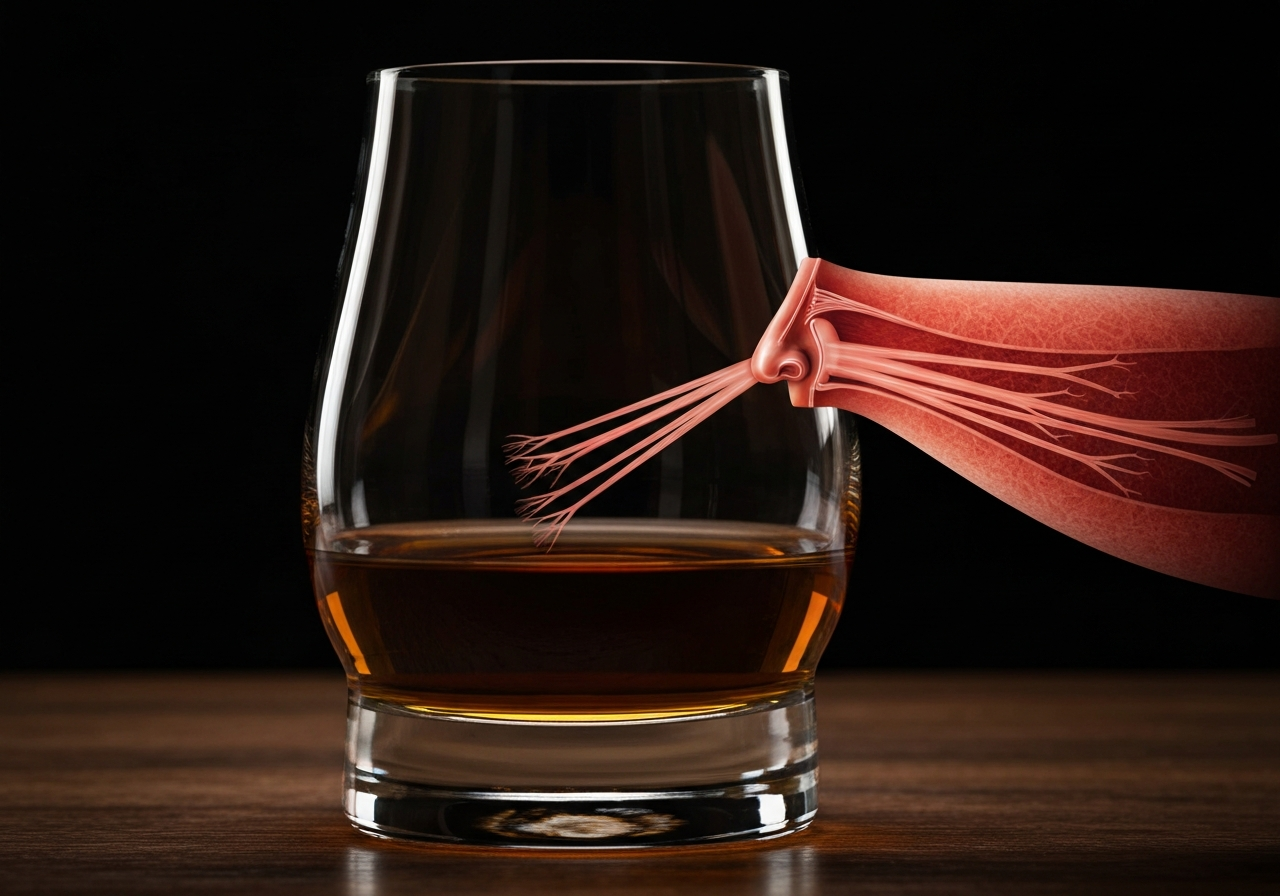
Have you ever noticed that the flavor of a whiskey seems to change or intensify right after you swallow? This isn't magic; it’s biology. The primary driver of what we perceive as the finish is a process called retronasal olfaction whiskey enthusiasts often overlook. While "orthonasal" olfaction is what happens when you sniff the whiskey through your nostrils, retronasal olfaction occurs when aromatic molecules travel from the back of your mouth, up through the throat, and into the nasal cavity. As you swallow, the movement of your throat muscles and the warmth of your body push these vapors upward, allowing your brain to process them as "flavor" rather than just "smell."
But there is more happening in your mouth than just vapor movement. Our saliva contains enzymes that immediately begin breaking down the complex whiskey molecules. This chemical reaction can release new volatile compounds that weren't present in the initial sip. For example, some of the heavier esters and wood-derived compounds might be "locked" in the liquid until they interact with your mouth's natural chemistry. This is why the finish can feel so much more complex than the first taste; it is literally a different chemical profile by the time it reaches your olfactory receptors.
Alcohol itself, or ethanol, plays a crucial role here as a carrier. Because alcohol evaporates quickly at body temperature, it acts as a vehicle for the heavier flavor molecules, helping them cling to the mucous membranes in your throat and esophagus. This creates a lingering presence that can last for minutes. We must also distinguish between the "physical" finish and the "aromatic" finish. The physical finish refers to the tactile sensations—the weight on your tongue or the dryness in your throat. The aromatic finish, however, accounts for about 80% of what we think of as the "flavor" of the finish. This interaction is also responsible for the "Kentucky Hug," that famous warm sensation that spreads through the chest. This physiological reaction isn't just heat; it’s the ethanol interacting with your nerves, and it creates a cozy backdrop for the delicate flavors of the grain and wood to dance against.
Measuring the Clock: Short, Medium, and Long Durations
When we talk about how to taste whiskey, one of the first things we look for is duration. We generally categorize the finish into three main brackets: Short, Medium, and Long. A "Short" finish is one that vanishes within seconds. While that might sound like a criticism, it’s often an intentional design choice. High-rye bourbons or young grain whiskies are frequently crafted for a "crisp, clean" exit, making them highly drinkable and refreshing in a cocktail. They don't overstay their welcome, leaving your palate ready for the next sip or a bite of food.
A "Medium" finish usually lingers for 30 to 60 seconds. This is the sweet spot for many daily-drinker scotches and bourbons, providing enough time to contemplate the flavors without requiring a massive investment of focus. However, the holy grail for many enthusiasts is the "Long" finish, where the flavor persists for minutes. These long durations are usually the result of high oil content, non-chill filtration (which preserves the fatty acids), and significant maturation—often 15 years or more. In older whiskies, the wood has had decades to integrate with the spirit, creating a dense structure that simply refuses to let go.
Then there are the "infinite" finishes. If you’ve ever tasted a heavily peated Islay malt like a Laphroaig or an Ardbeg, or perhaps a 30-year-old sherried Macallan, you know what I’m talking about. In these cases, the flavors can persist for ten minutes or more. The smoke and the deep tannins from the sherry casks create such a strong chemical bond with your palate that you can still "taste" the whiskey even after you’ve walked into another room. For a fun technical experiment during your next session of long vs short finish whiskey comparison, use a stopwatch. Take a sip, swallow, and start the timer. See how long it takes before you truly can’t detect any remaining notes. You might be surprised to find that your favorite "long" whiskey actually lasts much longer than you thought.
The Texture of Time: Mouthfeel and Lingering Tannins
The finish isn't just about what you taste; it’s about what you feel. This is where whiskey mouthfeel and whiskey tannins come into play. Tannins are polyphenols found in the oak barrels used for aging. They are the same compounds that give over-steeped tea or dry red wine that puckering, astringent quality. In whiskey, tannins are essential for structure, but they also define how the finish feels physically. A "drying" finish is common in heavily oaked bourbons, where the tannins strip away the moisture from your tongue, creating a physical craving for the next sip—a clever trick that makes the bottle disappear faster than you intended!
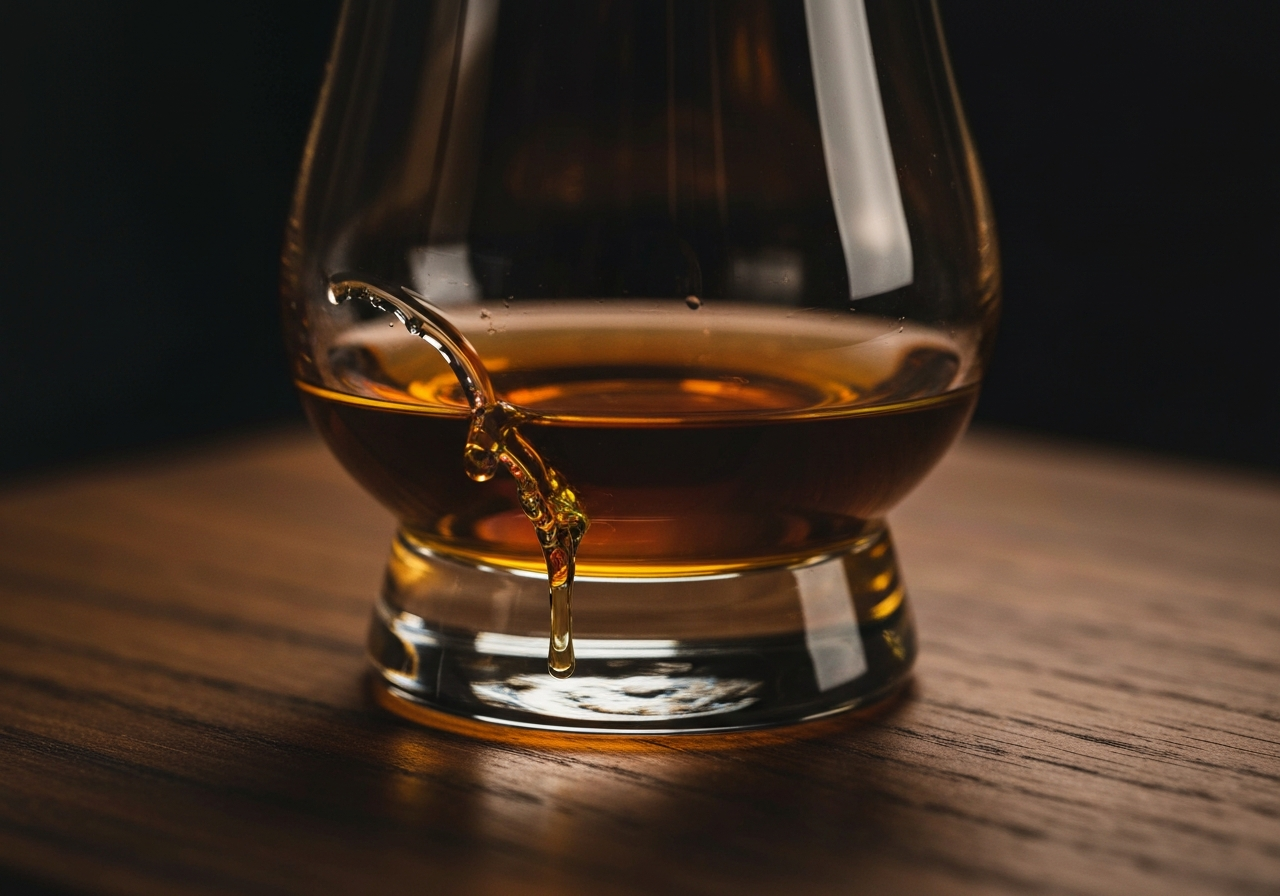
Contrast this with the "oily" or "creamy" finishes often found in Irish pot still whiskeys or certain unpeated malts. These spirits often contain higher levels of lipids (fats) that coat the mouth like velvet. Instead of a dry exit, you get a luxurious, slippery sensation that feels heavy on the tongue. This viscosity is often visible in the "legs" or "tears" that crawl down the side of your glass. Generally, the slower and thicker the legs, the more physical weight and "chewiness" you can expect in the finish.
Finally, there is the "effervescent" or "tingling" finish. This is usually associated with high-proof (cask strength) spirits or those with a high acidity profile. It feels like tiny sparks of electricity on the sides of the tongue. It’s an energetic exit that can be incredibly invigorating. When writing your notes, try to move beyond words like "smooth" and describe the actual texture. Is it chalky? Silky? Does it feel like parchment paper or like heavy cream? These tactile details are just as important as the flavors themselves in defining the character of the dram.
The Flavor Evolution: When the Notes Shift
One of the most fascinating aspects of a premium whiskey is its ability to change flavors during the finish. A dram that starts with an explosion of sweet vanilla and caramel on the palate might transition into a finish of dry clove, black pepper, or even bitter cocoa. This is what we call an "evolving" finish. It’s a sign of a complex, well-layered spirit where different molecules are evaporating at different rates. The lighter, fruitier notes often vanish first, leaving behind the "late-blooming" notes like tobacco, old leather, and earthy spices.
In peated whiskies, this evolution is particularly dramatic. The initial "campfire" smoke or "medicinal" iodine of a young peated Scotch can often evolve into a surprisingly sweet, briny finish that tastes like salted caramel or seaweed. This is due to the phenols—the chemical compounds responsible for the smokiness. As the aggressive smoke fades, the underlying spirit’s sweetness begins to peek through, creating a beautiful contrast. We look for "symmetry" here; a perfect finish should feel like a natural extension of what came before, even if the notes themselves change.
Take, for example, a whiskey finished in an Oloroso sherry cask. The palate might be dominated by bright red fruits and nuts, but as you swallow, the "coda" of the experience might shift into dark chocolate, roasted coffee beans, and raisins. It’s a transition from bright and sweet to dark and savory. When the finish feels like a disconnected add-on—perhaps a sudden, harsh bitterness that doesn't match the sweet nose—it's usually a sign that the whiskey was rushed or that the cask influence was too aggressive. A great whiskey shouldn't just end; it should resolve.
The Cask's Final Word: Wood Influence on the Tail
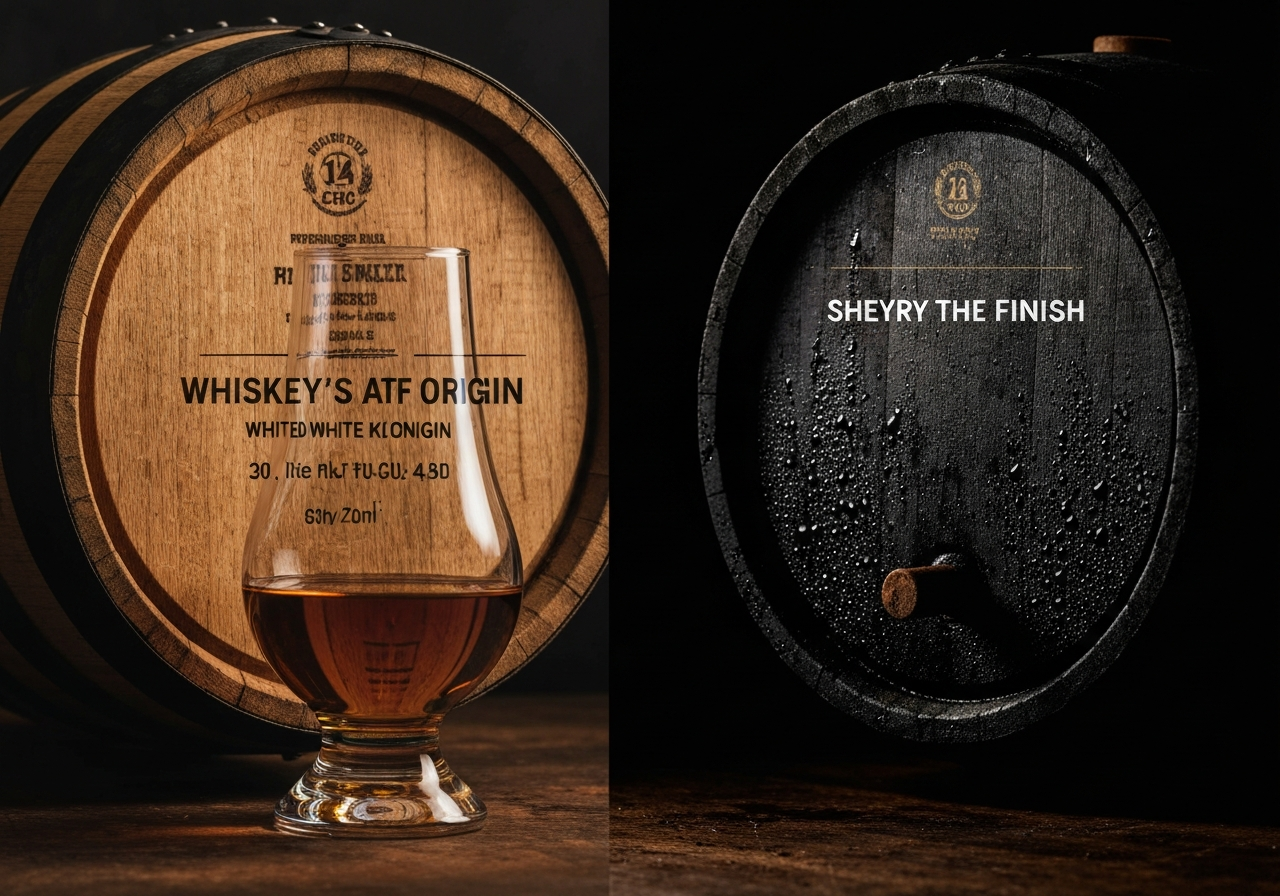
The barrel is often called the "second parent" of the whiskey, and its influence is never more apparent than in the finish. Different types of wood and different levels of char create distinct "tails." For instance, the "virgin" charred American oak used for Bourbon is rich in hemicellulose and lignin, which break down into vanillins and wood sugars. This creates that short, punchy, spicy finish with a hit of cinnamon or "red hots" candy that many Bourbon drinkers love.
European oak, on the other hand, is much more porous and contains significantly more tannins than American oak. This is why many Sherried scotches have a much more tannic, spicy, and long-lasting exit. The wood provides a "grip" on the palate that persists. Then we have the world of "cask finishing," where a whiskey is moved to a secondary cask (like Port, Madeira, or Rum) for the final few months of aging. This process is specifically designed to alter the finish. A Port pipe finish will often add a "tail" of exotic sweetness and a drying, grape-skin astringency that wasn't there in the original spirit.
We also have to consider the more controversial notes, like sulfur. Sulfur can sometimes appear in the finish of whiskies aged in sherry casks that were treated with sulfur candles. To some, this manifests as a "struck match" or "rubbery" note that ruins the finish; to others, it adds a savory, meaty complexity. Furthermore, the way the wood was prepared matters. Staves that have been air-dried for 24 to 36 months before being made into barrels have their harshest tannins leached out by the rain and sun. This results in a finish that is long and influential but lacks the aggressive bitterness of "green" or kiln-dried wood. The finish is truly the cask's final word on the spirit.
The Art of the 'Kentucky Chew' and Proper Exhalation
If you want to maximize the finish, you have to change how to taste whiskey at a fundamental level. You can't just swallow and hope for the best. One of the most famous techniques is the "Kentucky Chew," popularized by the late, great Booker Noe. The idea is to coat your entire tongue and the insides of your cheeks with the liquid, literally "chewing" on the whiskey. This aerates the spirit and ensures that every taste bud and aromatic receptor is primed. By the time you swallow, the whiskey has been warmed by your mouth and mixed with saliva, setting the stage for a spectacular finish.
Another essential technique is the "breathe-out" method. Immediately after you swallow, keep your mouth closed and exhale slowly and steadily through your nose. This forces the concentrated aromatic vapors from your throat directly over your olfactory receptors. This is the "retronasal" moment in action. You will often find that this simple act of exhaling reveals notes—like honeysuckle, mint, or old wood—that you completely missed while the liquid was still in your mouth.
For the true whiskey geeks, there is also the "empty glass test." After you’ve finished your dram, set the glass aside for ten or fifteen minutes. Then, go back and smell it. The alcohol will have evaporated, leaving behind only the heaviest, least volatile molecules. This "dry aroma" is often an exact preview of what the finish of that whiskey feels like. It’s a great way to identify those deep base notes like leather, tobacco, and heavy oak. To keep your palate sharp between these intense finishes, always have room-temperature water and plain crackers on hand. You don't want the long, smoky finish of a peated Islay to bleed into the delicate floral notes of a Speyside in your next glass!
Identifying the 'Off' Finish: Bitterness, Heat, and Disappointment
Not every finish is a pleasant one. Sometimes, the "whisper" of the whiskey is more of a raspy cough. A "clipped" finish is one of the most common disappointments; it’s when the flavor seems to be building toward a great climax, only to disappear instantly. This usually indicates a lack of age or poor fermentation where the complex esters didn't have time to form. It leaves the drinker feeling unsatisfied, like a joke without a punchline.
Then there is "tannic overload." This happens when a whiskey has spent too much time in a barrel, or in a barrel that was too small, leading to an over-extraction of wood chemicals. The finish becomes so bitter and mouth-puckering that it masks any pleasant flavors, leaving your tongue feeling like it’s been rubbed with sandpaper. This is different from "complex bitterness." A good finish might have notes of dark coffee or grapefruit peel—bitter, yes, but intentional and balanced. An unpleasant bitterness tastes more like medicine, damp cardboard, or wet dog.
We also have to watch out for "hot" finishes. This isn't just the warmth of the Kentucky Hug; it’s a sharp, prickly burning sensation caused by poorly integrated alcohol. It usually suggests that the "heads" or "tails" of the distillation run weren't cut properly, or that the whiskey is simply too young for its proof. Finally, keep an ear out for "metallic" notes. A metallic finish, reminiscent of sucking on a copper penny, often points to a lack of copper contact during the distillation process itself. Copper is essential for stripping away sulfur compounds; without enough of it, the finish will always have a "tinny" or "dirty" edge that no amount of aging can completely fix.
Conclusion: Developing Your Finish-Focused Palate
At the end of the day, the finish is where the soul of the whiskey resides. It is the part of the experience that requires the most patience, the most mindfulness, and the most silence. While the nose and the palate are immediate and loud, the finish is a slow fade that invites you to sit back and reflect. If you are looking to improve your palate, I highly encourage you to keep a tasting journal. Don't just list the flavors; note the "evolution" and the "duration." Ask yourself: How did it change? How long did it last? Was it drying or oily?
To really see the difference, try setting up a "Finish Flight." Compare a whiskey known for a quick, clean goodbye—like a young corn whiskey or a light Irish blend—against one known for its lingering embrace, like a 21-year-old Highland Park or a cask-strength rye. Seeing these extremes side-by-side is the best way to calibrate your internal clock. Remember, though, that personal preference is always the ultimate judge. Some nights you might want the "quick goodbye" of a light, refreshing dram that doesn't demand your attention. Other nights, you want a whiskey that stays with you, a companion that lingers long after the fire has gone out.
The next time you pour yourself a dram, resist the urge to take that second sip immediately. Put the glass down. Close your eyes. Breathe out through your nose. Wait at least sixty seconds and just listen to what the spirit has to say. You’ve heard the roar of the nose and the melody of the palate; now, stay for the whisper of the finish. It’s often the best part of the story. Slàinte!