Whiskey's Hidden Notes: Unlocking Nuance with Aromatics
Go beyond the first sniff to discover the complex layers of aroma that tell a whisky's story.
The Biological Bridge: Why the Nose is Your Secret Weapon
If you have ever taken a sip of a high-end single malt and thought, "I just taste alcohol," don’t worry—you aren’t broken. You are simply using the wrong equipment. While we often focus on the palate, the real heavy lifting in any tasting session happens about two inches higher. Our tongues are surprisingly limited tools, capable of identifying only five basic tastes: sweet, sour, salty, bitter, and umami. Your nose, however, is a biological supercomputer. Scientists have discovered that the human olfactory system can distinguish over 1 trillion different scents. When you are looking for those elusive whiskey aromatic notes, your nose is doing 90% of the work.
The science of whisky aroma is a fascinating intersection of biology and chemistry. One of the most important concepts for any enthusiast to understand is "retronasal olfaction." This is the process where aromas travel from the back of your mouth up into your nasal cavity while you are drinking. Have you ever noticed how a whisky’s flavor seems to "blossom" after you swallow? That is retronasal olfaction in action, and it accounts for up to 80% of what we perceive as "flavor." Without our sense of smell, most whiskies would simply taste like a mixture of bitter wood and sweet grain.
There is also a deeply emotional component to nosing. The olfactory bulb, which processes scents, is directly linked to the limbic system—the part of the brain responsible for emotion and memory. This is often called the "Proustian Effect." It is why a specific whiff of campfire smoke in a peated Scotch can suddenly transport you back to a childhood camping trip or why a certain vanilla note reminds you of your grandmother’s kitchen. Our brains are hardwired to associate scents with stories.
Biologically, we are also incredibly sensitive to certain compounds. Our "sensory threshold" for specific molecules is staggering. For instance, humans can detect geosmin (that earthy, "rain on dry soil" smell) or certain sulfur compounds at levels as low as parts-per-billion. To unlock these, we rely on our saliva. Saliva acts as a biological solvent, breaking down the liquid’s surface tension and releasing volatile aromatic compounds into the air within our mouths, allowing us to experience the full spectrum of the spirit.

Engineering the Experience: The Role of Glassware in Aromatics
You wouldn’t listen to a symphony through cheap plastic earbuds, so why would you nose a world-class spirit in a standard tumbler? When it comes to whisky nosing techniques, your choice of glass is your most important piece of hardware. The traditional "Rocks" glass, or tumbler, is great for a casual drink with ice, but its wide, straight rim is the enemy of nuance. The wide opening allows the ethanol vapors to escape too quickly, and along with them go the delicate top notes of fruit and floral esters that make a whisky special.
Enter the Glencairn. The Glencairn glass benefits from a very specific "Tulip" shape designed by the master blenders of Scotland. The wide bowl allows for maximum surface area and aeration—especially when you give it a gentle swirl—while the inward-tapering rim acts as a funnel. It concentrates the aromatic molecules at the top of the glass, delivering them directly to your nostrils while allowing the heavier alcohol vapors to dissipate more evenly. This concentration is essential for detecting whisky notes that might otherwise be lost to the room.
For those looking to dive even deeper, many professionals prefer the Copita glass. This is the traditional sherry-tasting glass, often featuring a long stem. The stem isn’t just for aesthetics; it prevents the heat from your hand from warming the whisky too quickly and ensures that natural oils or scents on your skin (like hand soap or cologne) don't interfere with the liquid’s profile. In both the Glencairn and Copita, the "headspace"—the pocket of air between the liquid and the rim—is where the magic happens. This is where the most volatile compounds gather, waiting to be discovered.
A pro-tip for your next session: cleanliness is everything. Even a tiny residue of dish soap or the "cupboard smell" of a glass that hasn't been used in a month can completely derail a professional-level nosing session. Always rinse your glassware with hot water and dry it with a lint-free microfiber cloth before pouring. If you can smell the glass before the whisky goes in, you aren't ready to taste.
Beyond the Burn: Professional Nosing Techniques
If you've ever shoved your nose deep into a glass of 120-proof bourbon and felt a sharp, stinging pain, you’ve met your trigeminal nerve. This nerve reacts to the "pain" of high-alcohol vapors, and once it’s triggered, your ability to smell anything else is effectively shut down for several minutes. Learning how to smell whisky is largely about learning how to bypass this "burn."
The first technique to master is the "Drive-By." Instead of hovering over the glass, pass it slowly under your nose from one side to the other at a distance of a few inches. This introduces the senses to the spirit gently, allowing your brain to register the "big" aromas without the ethanol assault. As your nose adjusts, you can gradually move the glass closer.
Another "pro secret" is the Open Mouth Technique. It might feel a bit silly at first, but keeping your mouth slightly open while you sniff equalizes the pressure in your nasal cavity. This allows the alcohol vapors to pass through rather than overwhelming your receptors, making the actual aromatic notes much more accessible. Think of it as creating a "breeze" that carries the scent rather than a vacuum that sucks in the sting.
Did you know you likely have a "dominant" nostril? Due to the nasal cycle, one nostril is usually clearer than the other at any given time. Professional tasters often switch between the left and right nostrils, as each can pick up slightly different layers of the whisky’s profile. Combine this with the Three Sniff Rule:
- Sniff One: Mostly alcohol and "punch." Your brain is just getting its bearings.
- Sniff Two: The main category emerges—is it smoky, sweet, or spicy?
- Sniff Three: This is where the nuance lives. This is where you find the dried apricots, the old leather, or the sea salt.
Finally, try the "Hand Warming" technique. If a whisky feels "closed" or muted, cup the bowl of the glass in your palms for a minute. The gentle increase in temperature encourages heavier molecules like vanillins and phenols to vaporize, releasing scents that stay trapped at room temperature.
The Grain’s Whisper: Fermentation and Primary Aromas
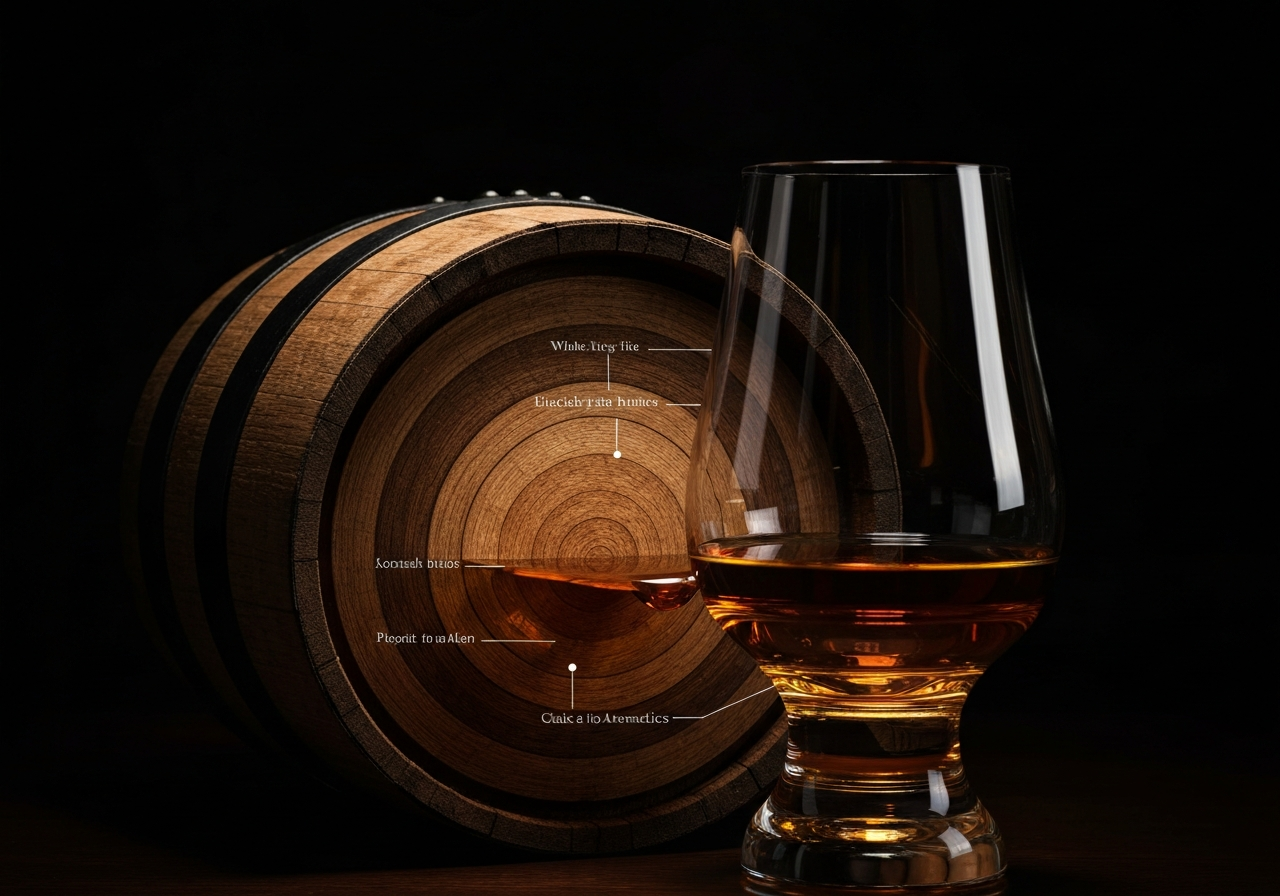
Every story has a beginning, and in whisky, that beginning is the "Primary Aromas." These are the scents derived directly from the raw materials—the barley, corn, or rye—and the crucial stage of fermentation. Long before the whisky ever sees a wooden barrel, it is already developing a complex chemical fingerprint.
The real unsung hero here is yeast. During fermentation, yeast eats sugars and creates alcohol, but it also produces esters. If a distillery uses a long fermentation process (often over 60 hours), the yeast has more time to create "estery" notes. The most famous of these is isoamyl acetate, which smells remarkably like green apples, pears, or even circus peanuts and tropical fruits. If you’ve ever nosed a Speyside malt and smelled a fresh fruit orchard, you are smelling the work of the yeast, not the wood.
Then there are the "Cereal" notes. Depending on how the grain was kilned (dried), you might find scents of toasted bread, digestive biscuits, or even wet hay. This is the "grain’s whisper," the foundational maltiness that gives whisky its body. In the distillation phase, the shape of the stills also plays a role. Copper is a reactive metal; as the alcohol vapor rises, the copper strips away heavy sulfurous compounds that smell like "meaty" or "rotten eggs." This creates a clean, floral, or fruity "new make" spirit.
We also have to talk about the specific signature of Rye. High-rye mash bills are famous for their spicy, herbal, and "green" notes. This comes from specific chemical compounds in the rye grain that manifest as dill, mint, or black pepper. When you are detecting whisky notes in a bold American Rye, you are experiencing the raw, unadulterated power of the grain itself.
Wood and Weather: The Chemistry of Maturation
While the spirit provides the foundation, most experts agree that 60% to 70% of a whisky’s final aroma comes from the cask. This is the "Secondary Aroma" phase, where the spirit breathes through the wood over years or decades. The science of whisky aroma during maturation is essentially the story of the wood breaking down.
Oak is composed of complex organic polymers, the most important of which is lignin. As the spirit moves in and out of the wood with the changing seasons, it breaks down that lignin into vanillin—the same compound found in vanilla beans. This is why almost every bourbon and scotch has at least a hint of vanilla. Additionally, the breakdown of wood produces guaiacol, which contributes woody and slightly smoky notes, even in whiskies that aren't peated.
The species of oak matters immensely. American Oak (Quercus alba) is dense and rich in "lactones," which give us those classic notes of coconut, caramel, and toasted marshmallows. European Oak (Quercus robur), often used for sherry casks, is more porous and tannin-rich, offering deep notes of dried fruits (raisins, dates) and "Christmas" baking spices like cinnamon and clove.
"The barrel is not just a container; it is a lung. It breathes in the warehouse air and breathes out the 'Angels' Share,' the portion of alcohol that evaporates over time."
This "breathing" also allows for oxidation. As oxygen enters the cask, it rounds off the harsh edges of the young spirit and creates "rancio"—a term borrowed from Cognac that describes the nutty, earthy, and "umami" notes found in very old whiskies. A helpful way to think about cask influence is the Tea Bag Analogy. A "first-fill" cask is like a fresh tea bag; it gives off intense flavor very quickly. A "refill" cask is like using that same tea bag a second or third time—the influence is more subtle, allowing more of the original distillery character to shine through. This is why a 25-year-old whisky isn't always "woodier" than a 10-year-old; it depends entirely on the history of the cask.
Decoding the Phenolic Spectrum: Peat, Smoke, and Sea
For many, the smell of "smoke" is the most polarizing aspect of whisky. But "smoky" is a broad, often insufficient term. To truly master whisky nosing techniques, we have to look at the phenols. Phenols are the chemical compounds released when peat is burned to dry the malted barley. However, not all peat is created equal.
The classic Islay profile—think Laphroaig or Ardbeg—is often described as "medicinal." This is because the peat on Islay is composed of ancient decomposed seaweed and salt spray. This maritime influence creates high levels of guaiacol and cresols, leading to aromas of iodine, bandages, and sea air. Contrast this with Highland or Island peat, which is often made from decomposed wood or heather. These whiskies tend to smell more like a "forest fire," "wood smoke," or "earthy bonfire" rather than a medicine cabinet.
You will often see "PPM" (Phenol Parts Per Million) listed on a bottle. While this is a measurement of smoke, it can be deceiving. A whisky with 50 PPM might actually smell less smoky than one with 20 PPM. This is because the "cut points" during distillation can filter out many of those heavy phenol molecules. Perception is key; the science of whisky aroma tells us that how our brain interprets the smoke is more important than the lab result.
There is also the "Cold Ash" effect. In young peated whiskies, the smoke is often hot, acrid, and aggressive. As the whisky ages, those volatile phenols interact with the wood and oxygen, transforming into something much gentler. In a 30-year-old peated malt, the "smoke" often presents as sweet pipe tobacco, smoked meats, or even a subtle "ashy" sweetness that lingers long after the glass is empty.
The Science of a Drop: How Water Releases Aromas
One of the most debated topics in the whisky world is whether or not to add water. In 2017, a team of Swedish researchers actually settled the debate using computer simulations. They found that a specific molecule called guaiacol (which carries those smoky, woody scents) is naturally repelled by water. When you add a drop of water to your dram, it pushes these molecules to the surface of the liquid.
This is known as a hydrophobic reaction. Many of the most interesting aromatic compounds in whisky "hate" water. When you add a splash, these molecules literally "leap" out of the liquid and into the headspace of your glass, making them much easier to nose. Furthermore, water breaks the surface tension of the spirit. If you imagine the surface of the whisky as a "lid," adding water effectively "opens the lid," letting the trapped esters and aldehydes escape into the air.
This is especially important for cask strength whiskies. At high ABV (usually over 50%), the alcohol molecules actually cluster together, "locking" the aromatic compounds inside these clusters. By diluting the spirit down to 40% or 45%, you break up these clusters and "unzip" the flavor profile. I always recommend the "Swimming" technique: nose the whisky neat first, then add one single drop of water. Watch how the aroma shifts from "closed" and "tight" to "blossoming" with new layers of fruit or spice.
Navigating the Wheel: Categorizing What You Smell
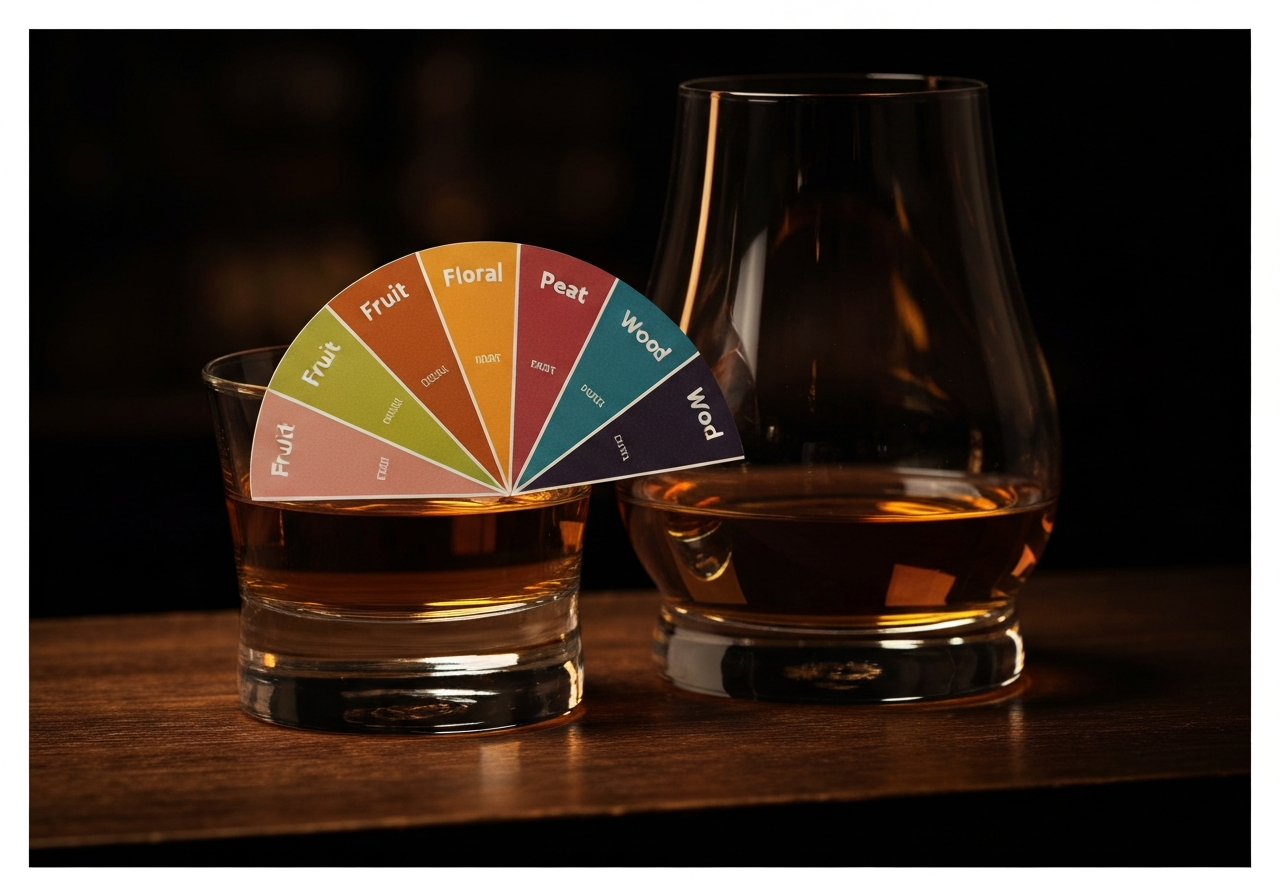
When you are first starting out, the sheer number of possible scents can be overwhelming. This is where the whisky flavor wheel becomes your best friend. It helps you move from broad, "vague" sensations to specific, "granular" notes. Professional tasters don't just jump to "Granny Smith Apple"; they work their way there.
- Broad Category: Is it Fruity?
- Sub-Category: Is it Orchard Fruit, Citrus, or Dried Fruit?
- Specific Note: It's Orchard Fruit... specifically, a tart Green Apple.
Understanding the "Spice Matrix" is also helpful. You can often differentiate where a spice comes from based on its character. "Baking Spices" like cinnamon, nutmeg, and vanilla almost always come from the oak. "Peppery Spices" or herbal notes like clove and mint often come from the grain or the distillation cut points. If you smell lavender or heather, you are likely picking up the "floral" end of the spectrum, which usually indicates a "high cut" where the distiller took the spirit earlier in the run.
Don't be afraid of the "Dirty" notes either. To a beginner, scents of old leather, tobacco, or even a hint of sulfur might sound like flaws. In reality, these are "character notes" that provide depth and "funk" to complex drams. Sometimes, professional tasters use descriptors that sound bizarre, like "new sneakers," "old library books," or "wet dog." These aren't pretension—they are valid sensory markers. If a certain chemical compound in the whisky triggers a specific memory of a "new sneaker" smell, that is a perfectly valid way to record your experience.
Training Your Palate: Practical Exercises for Improvement
The good news is that "having a good nose" is a skill that can be trained, not just a gift you are born with. To get better at detecting whisky notes, you need to build a "sensory library" in your brain. One of the best ways to do this is the Kitchen Cabinet Exercise. Spend five minutes a day smelling things in your kitchen: cracked black pepper, honey, dried apricots, vanilla extract, or even a handful of flour. When you encounter these scents in a "neutral" environment, your brain becomes much better at spotting them when they are hidden behind 40% alcohol.
Comparative Nosing is another powerful tool. Instead of nosing one whisky, nose two very different ones side-by-side—for example, a heavy Sherry-bomb like Macallan next to a light, bourbon-cask Scotch like Glenmorangie. The contrast will act like a spotlight, making the "red fruit" of one and the "citrus/vanilla" of the other much more obvious.
If you really want to test yourself, try the "Blind Challenge." Our brains are incredibly susceptible to "confirmation bias." If you see a label that says "Bourbon Cask," your brain will subconsciously look for vanilla. By removing the label, you force your senses to work without a safety net. This is often where the most surprising discoveries are made.
Finally, keep a nosing journal (or use the DramNote app!). Sensory memory is notoriously short-lived. If you don't write down that "smell of sun-warmed hay" immediately, it will be gone in ten minutes. Also, be mindful of external factors. The temperature of the room, what you had for lunch (avoid spicy food before a tasting!), and even the humidity can all affect your ability to perceive nuance. Consistency is the key to improvement.
Conclusion: The Narrative in the Glass
At the end of the day, mastering whisky nosing techniques isn't about being "right" or "wrong." There are no wrong answers in your glass because your sensory equipment and your life experiences are unique to you. When you smell a whisky, you aren't just looking for a list of ingredients; you are reading a biography. You are smelling the field of barley where it began, the specific yeast that brought it to life, the copper that purified it, and the decade of weather that shaped it inside a wooden cask.
The most important tool you can bring to a tasting isn't a fancy glass or a drop of expensive water—it's patience. There is an old rule of thumb in the industry: let a whisky breathe for one minute for every year it spent in the cask. A 12-year-old malt needs time to stretch its legs and "wake up" after years of being trapped in a bottle. This patience transforms whisky from a simple beverage into a meditative, sensory experience.
We invite you to take these new techniques and revisit a bottle you think you know well. Pour it into a proper glass, keep your mouth open, add a single drop of water, and wait. You might find that the "familiar" dram has a whole new story to tell. What hidden notes will you discover today? Start your journey, keep your journal close, and let the aromatics lead the way.